


El sucio secreto de las herramientas de "personalización de IA"
La mayoría de las herramientas de correo electrónico frías comparten un secreto sucio que sus páginas de marketing se esfuerzan por ocultar. Cuando prometen "personalización de IA", lo que en realidad quieren decir es que el software insertará el nombre de su cliente potencial en el saludo y tal vez colocará el nombre de su empresa en el segundo párrafo, si se acordó de cargar un CSV correctamente completado. Toda la operación es una combinación de correspondencia disfrazada de una interfaz SaaS, y sus clientes potenciales lo saben. Eliminan esos correos electrónicos en dos segundos porque el mensaje se lee exactamente como es: una plantilla entregada a diez mil personas con un intercambio de variables de tres palabras.
Si tu objetivo es realmente obtener oportunidades de venta quienes responden y realizan conversiones, este enfoque es peor que no enviar nada: quema la reputación de su dominio y entrena a los clientes potenciales para que ignoren su nombre. Real personalization significa que el correo electrónico hace referencia a algo específico sobre el negocio del destinatario que un raspador genérico no podría saber: una ronda de financiación cerrada el mes pasado, un problema que su equipo de ingeniería discutió en una publicación de blog reciente o una comprensión demostrada de quiénes son en las dos primeras oraciones.
Históricamente, este nivel de personalización ha sido imposible de escalar porque requiere una investigación por cliente potencial que ningún equipo de SDR puede soportar más de 50 correos electrónicos al día. EasyClaw cambia eso al fusionar la investigación, la escritura y el envío en una única canalización automatizada que se ejecuta localmente. El agente no intercambia tokens en una plantilla: abre el sitio web de cada cliente potencial, lee su página Acerca de, escanea anuncios recientes, busca en LinkedIn y escribe un correo electrónico que solo puede dirigirse a esa empresa específica.
Scaling Outbound Through Deep Personalization
Las plataformas tradicionales de correo electrónico en frío funcionan con un modelo de plantilla más variables: un cuerpo de correo electrónico, campos dinámicos, intercambio por datos CSV. El resultado son cincuenta variaciones de "Hola, {{first_name}}, noté que {{company_name}} está haciendo grandes cosas en {{industry}}." Esto no es personalización, es reemplazo de cadenas.
El enfoque EasyClaw invierte el flujo de trabajo. En lugar de comenzar con una plantilla y completar variables, el agente comienza con el liderazgo y realiza una investigación genuina: abre el sitio web de la empresa, lee la página Acerca de y los anuncios, busca en LinkedIn la función y el mandato del contacto y sintetiza todo el contexto en un correo electrónico breve y específico que hace referencia a algo real y reciente. Solo después de escribir el correo electrónico, el agente pasa al siguiente cliente potencial.
El resultado no es una combinación de correspondencia. Son cincuenta correos electrónicos únicos, cada uno de los cuales demuestra que el remitente hizo su tarea. Enviados a través de su propio Gmail o Outlook (navegador real, IP real, reputación de envío real) llegan a las bandejas de entrada principales porque el patrón se ve exactamente como el contacto manual de una persona real.
Plan para obtener oportunidades de ventas de forma nativa utilizando EasyClaw
Step 1: Habilite las habilidades Browser Tool y XLSX
Permitir Browser Tool para investigar sitios web, blogs y LinkedIn de clientes potenciales, utilizando su Chrome real con sesiones de inicio de sesión existentes para Gmail, LinkedIn y cualquier plataforma autenticada. Permitir XLSX para leer su lista de clientes potenciales desde Excel y escribir los correos electrónicos generados para su revisión. Si desea que el agente envíe directamente a través de Gmail o Outlook, Browser Tool se encarga de redactar y enviar a través de su cuenta de correo electrónico real, sin configuración SMTP ni servicio de envío de terceros.
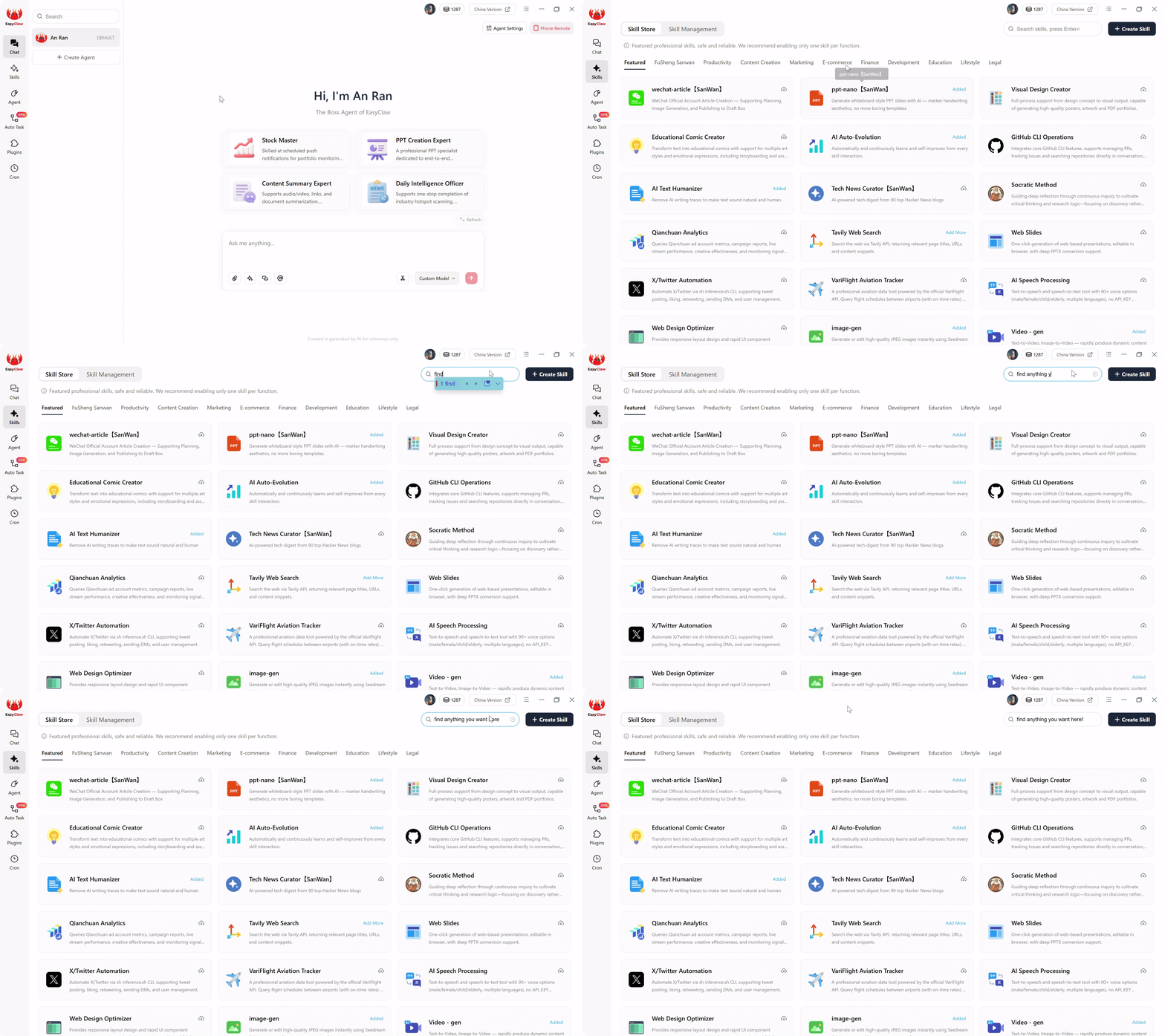
Habilite Browser Tool para enviar correos electrónicos a través de su cuenta Gmail o Outlook real: sin configuración SMTP, sin servicio de envío de terceros, sin riesgo de reputación de dominio debido a IP compartidas.
Step 2: Deje que la IA genere el script de su proceso de divulgación
Abra el chat y describa la ubicación de su lista de clientes potenciales, los pasos de investigación por cliente potencial, la estructura y el tono del correo electrónico y las preferencias de envío (solo borrador o envío directo). La IA genera un script que cubre: leer la lista de clientes potenciales de Excel, investigar cada empresa (sitio web, blog/noticias, LinkedIn), mapear los puntos débiles de su solución y generar correos electrónicos con líneas de asunto específicas que hacen referencia a los resultados de la investigación, todo en menos de 90 palabras, escrito como un compañero que ofrece una observación en lugar de un proveedor que presenta un producto.
Step 3: programar el trabajo cron
Cree una tarea cron "Cold Outreach Pipeline" en el momento que prefiera: las mañanas temprano entre semana funcionan mejor. Inmediato: "Leer y ejecutar cold-outreach-pipeline.md en mi espacio de trabajo". El agente lee su lista de clientes potenciales, investiga cada empresa, escribe correos electrónicos personalizados y los guarda como borradores para su revisión o los envía directamente con retrasos aleatorios de 2 a 4 minutos entre cada envío.
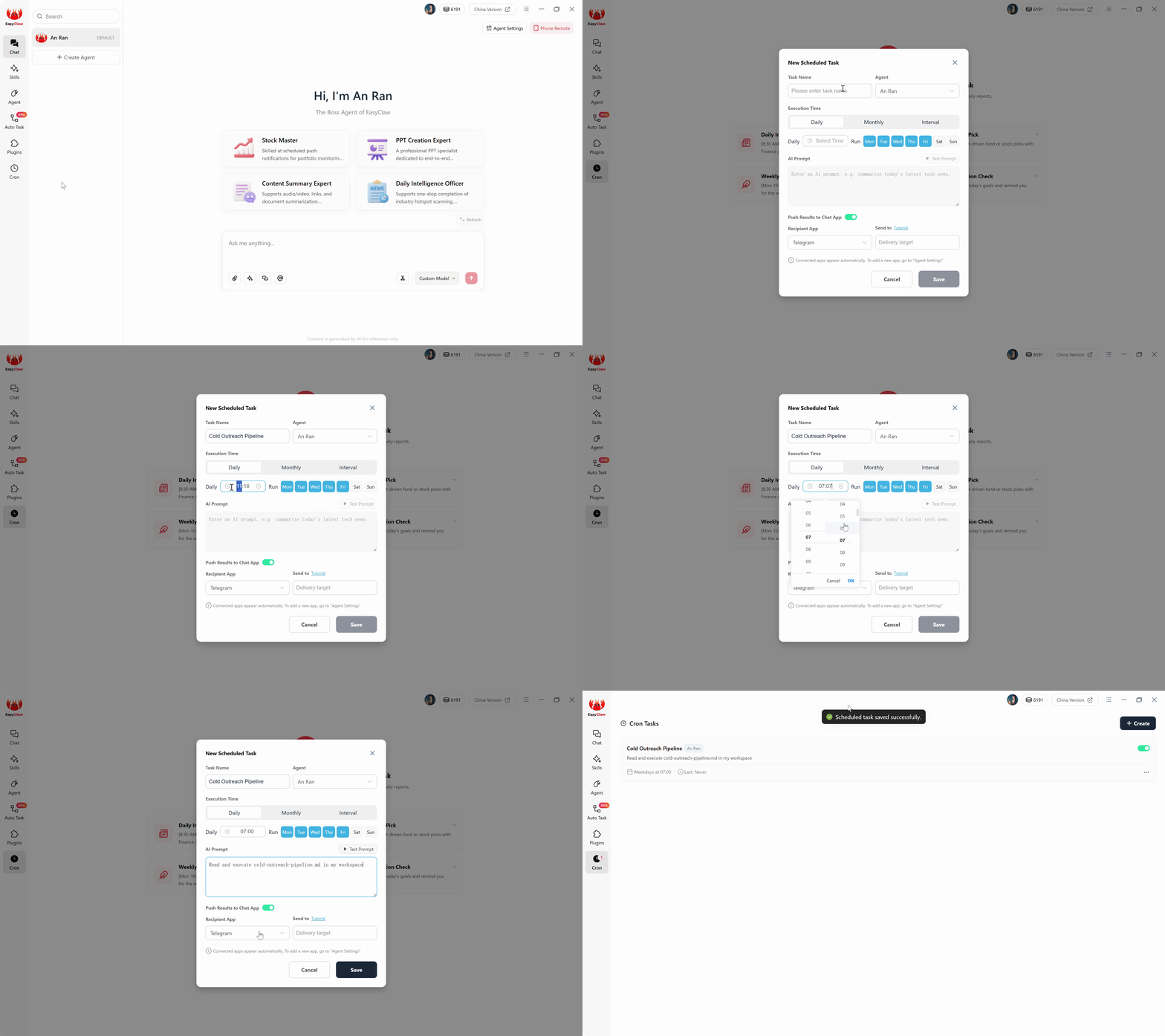
El canal de divulgación se ejecuta: leyendo datos de clientes potenciales de Excel, investigando el sitio web y el blog de cada empresa y redactando correos electrónicos fríos genuinamente personalizados, no combinaciones de correspondencia de plantillas.
Proteger la capacidad de entrega para convertir consistentemente clientes potenciales de ventas
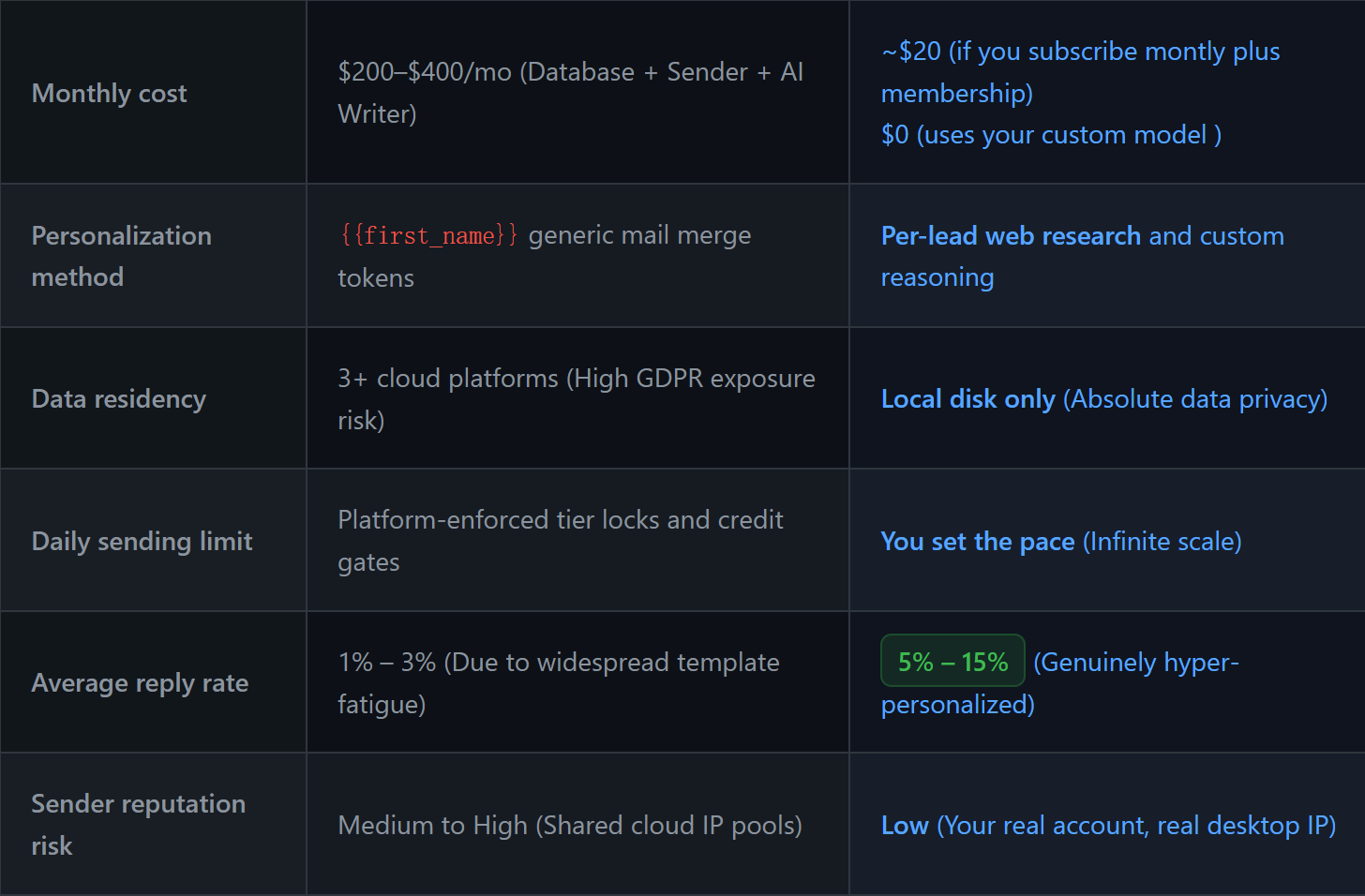
Las herramientas de correo electrónico en la nube utilizan IP compartidas y variables de plantilla que activan filtros de spam; EasyClaw redacta y envía a través de su cuenta de correo electrónico real con una personalización genuina respaldada por investigaciones.
La automatización del correo electrónico en frío vive o muere según la capacidad de entrega, y la capacidad de entrega vive o muere comportamiento de envío similar al humano. Si 50 correos electrónicos salen de su Gmail en 60 segundos, los algoritmos de Google marcan el patrón al instante. El script de canalización especifica de 2 a 4 minutos entre envíos: procesar 40 correos electrónicos durante 2 horas parece un profesional ocupado trabajando en su lista de divulgación. Procesar 40 correos electrónicos en 2 minutos parece un robot de spam.
La calidad de la investigación impacta directamente en las tasas de respuesta, y las tasas de respuesta impactan directamente en la capacidad de entrega. Los proveedores de correo electrónico realizan un seguimiento de la interacción: los mensajes abiertos, leídos y respondidos mejoran la reputación de su remitente. Se abren correos electrónicos genuinamente personales que hacen referencia a algo específico. Las plantillas obvias se eliminan. La inversión en investigación se amortiza con la colocación en la bandeja de entrada. Cuando consistentemente obtener oportunidades de venta Quienes responden e interactúan, los proveedores de correo electrónico se convierten en su aliado: su dominio se gana la reputación de enviar correo deseado.
Por qué EasyClaw reemplaza toda su pila de correo electrónico frío
Una pila saliente tradicional cuesta entre 200 y 400 dólares al mes en bases de datos de clientes potenciales, plataformas de envío y herramientas de escritura de inteligencia artificial, con datos de clientes potenciales en al menos tres plataformas en la nube. EasyClaw integra la investigación, la redacción y el envío en un canal local.
Abre sitios web de empresas, lee blogs, escanea LinkedIn y escribe correos electrónicos que hacen referencia a hallazgos reales y específicos.
No hay plantillas de {{first_name}}. Cada correo electrónico es único, tiene menos de 90 palabras y hace referencia a algo que solo la investigación pudo encontrar.
Envía tu correo electrónico real con retrasos de 2 a 4 minutos a ritmo humano. Sin configuración SMTP. Tu reputación, tu control.
Las listas de clientes potenciales y los correos electrónicos generados permanecen en su escritorio. Ninguna plataforma de correo electrónico de terceros almacena los datos de sus clientes potenciales.
Ventajas
- Tasas de respuesta entre 3 y 5 veces mayores que las campañas de plantilla
- El envío a ritmo humano protege la capacidad de entrega
- Sin tarifas de plataforma de envío: utiliza su bandeja de entrada real
- Modo de solo borrador para revisar antes de enviar
- Nivel gratuito disponible
Limitaciones
- Volumen diario limitado mediante el envío de rampa de reputación
- Requiere escritorio con sesión de correo electrónico activa
Preguntas frecuentes sobre el correo electrónico frío personalizado con IA
Lo que acabas de reemplazar
Una pila tradicional de generación de prospectos salientes (Apollo/ZoomInfo ($100/mes), Instantly/Smartlead ($80-100/mes) y una herramienta de escritura de inteligencia artificial—cuesta entre $200 y $400/mes antes de enviar un solo correo electrónico, con datos de prospectos en al menos tres plataformas en la nube que usted no controla.
Su canalización EasyClaw lo reemplaza todo. El agente lee su lista de clientes potenciales desde un archivo Excel local, sin suscripción a una base de datos. Investiga a cada cliente potencial y escribe correos electrónicos genuinamente personalizados, sin necesidad de una herramienta de redacción de IA separada. Redacta o envía su correo electrónico real con un ritmo humano, sin plataforma de envío. Todo se ejecuta localmente, los datos de sus clientes potenciales nunca tocan un servidor de terceros.
Sales leads generados a través de un alcance genuinamente personalizado se convierten a una tasa de 3 a 5 veces mayor que las campañas de plantilla. Cuando cada correo electrónico hace referencia a algo real sobre el destinatario, su tasa de respuesta deja de ser una función del volumen y comienza a ser una función de la relevancia. Para los equipos, fundadores y especialistas en marketing de crecimiento de SDR de todo el mundo, la IA no les ayuda a enviar más correos electrónicos, sino que les ayuda a enviar mejores.