


La bomba de tiempo de cumplimiento en su pila de clientes potenciales en la nube
Cada vez que su equipo de marketing carga un CSV de dos mil prospectos en una herramienta de enriquecimiento en la nube (Apollo, ZoomInfo, un raspador de nube, middleware CRM), su empresa crea un evento legalmente significativo en el que la mayoría de los líderes de ingresos nunca piensan hasta que un regulador solicita registros de procesamiento de datos. Esa hoja de cálculo contiene nombres de personas reales, puestos de trabajo, correos electrónicos y afiliaciones de empresas. En el momento en que esas filas llegan a un servidor de terceros, su empresa se convierte en un controlador de datos que ha compartido información personal con un procesador que probablemente no haya examinado, bajo un DPA que probablemente no haya firmado, en una jurisdicción que probablemente no pueda nombrar.
Para empresas que operan bajo GDPR en Europa, CCPA en California o cualquiera de las regulaciones de privacidad en rápida expansión en todo el mundo., este no es un riesgo teórico. Es una infracción de cumplimiento que espera ser descubierta, con multas que comienzan en el 4% de los ingresos globales anuales. El equipo de ventas subió una lista. El proveedor de enriquecimiento lo almacenó en AWS en Virginia. La herramienta de verificación de correo electrónico lo almacenó en caché en un servidor en Frankfurt. Se documentaron None de estas transferencias. None de los interesados dio su consentimiento. Y su empresa es legalmente responsable de todo ello.
El modelo de una arquitectura local soberana de generación de leads
La mayoría de los equipos de ventas no se dan cuenta de cuántos servidores en la nube tocan sus datos de clientes potenciales en un día normal. Un cliente potencial ingresa a través de un formulario de sitio web que se publica en un CRM alojado en un proveedor. Un flujo de trabajo de enriquecimiento en Zapier extrae el registro y consulta una base de datos externa. Una herramienta de verificación separada hace ping a un servidor SMTP desde otro centro de datos. Para cuando el cliente potencial esté listo para la divulgación, cuatro proveedores de nube diferentes han procesado datos personales perteneciente a un individuo que nunca dio su consentimiento.
Un canal local construido sobre EasyClaw elimina cada uno de esos puntos de contacto externos al agruparlo todo en una sola máquina. El programador cron desencadena una sesión de agente. El agente lee un script de canalización: un archivo Markdown simple que define cada fase. La ejecución utiliza herramientas instaladas localmente: Browser Tool para navegar por sitios web, XLSX para escribir resultados estructurados y el LLM integrado para puntuación. En ningún momento los datos del cliente potencial atraviesan una conexión de red a un servidor que no es de su propiedad.
Step-by-Step: Lanzamiento de su canal privado
Step 1: Habilitar las habilidades básicas
Abra el panel de Habilidades y habilite Browser Tool y XLSX. Browser Tool controla su Chrome real con cookies, sesiones de inicio de sesión y huellas digitales TLS reales, no una instancia sin cabeza. XLSX crea y formatea libros de Excel localmente. Ningún dato pasa a través de ninguna habilidad a un servidor externo. Ambos operan completamente dentro de su entorno de escritorio.
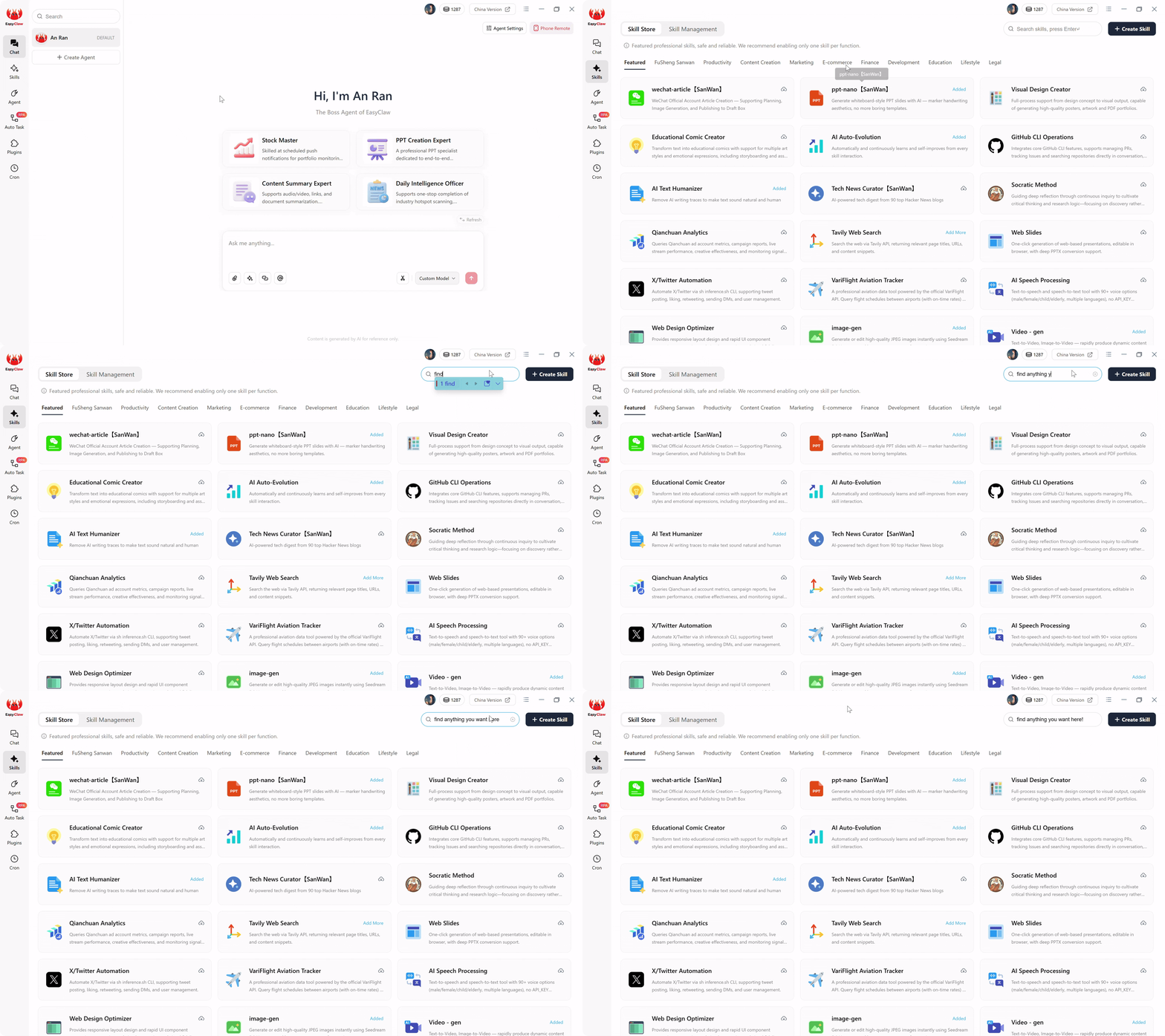
Habilite Browser Tool y XLSX: ambos funcionan 100% localmente. Ningún dato pasa a través de ninguna habilidad a ningún servidor externo.
Step 2: Deje que la IA genere su secuencia de comandos de canalización privada
Abra el chat EasyClaw y describa sus fuentes de descubrimiento de clientes potenciales, reglas de enriquecimiento, criterios de puntuación y preferencias de salida. La instrucción crítica: "Esta canalización nunca debe enviar datos a ninguna API externa, servicio en la nube o servidor de terceros. Toda la extracción, el enriquecimiento, la puntuación y el almacenamiento deben realizarse localmente en esta máquina". La IA genera un script que respeta la restricción local en cada fase: descubrimiento a través de su navegador, enriquecimiento a través de su navegador, puntuación en su máquina, almacenamiento en su disco duro.
Step 3: Programar la canalización privada
Cree un trabajo cron llamado "Private Lead Pipeline" en su horario preferido. Inmediato: "Leer y ejecutar private-pipeline.md en mi espacio de trabajo". Antes de programar, verifique manualmente el comportamiento solo local de la canalización revisando el archivo de registro. Confirme que cada acción sea una operación de archivo local o una navegación del navegador a una URL que haya enumerado. Si ve alguna conexión a un dominio no reconocido, audite y ajuste las restricciones.
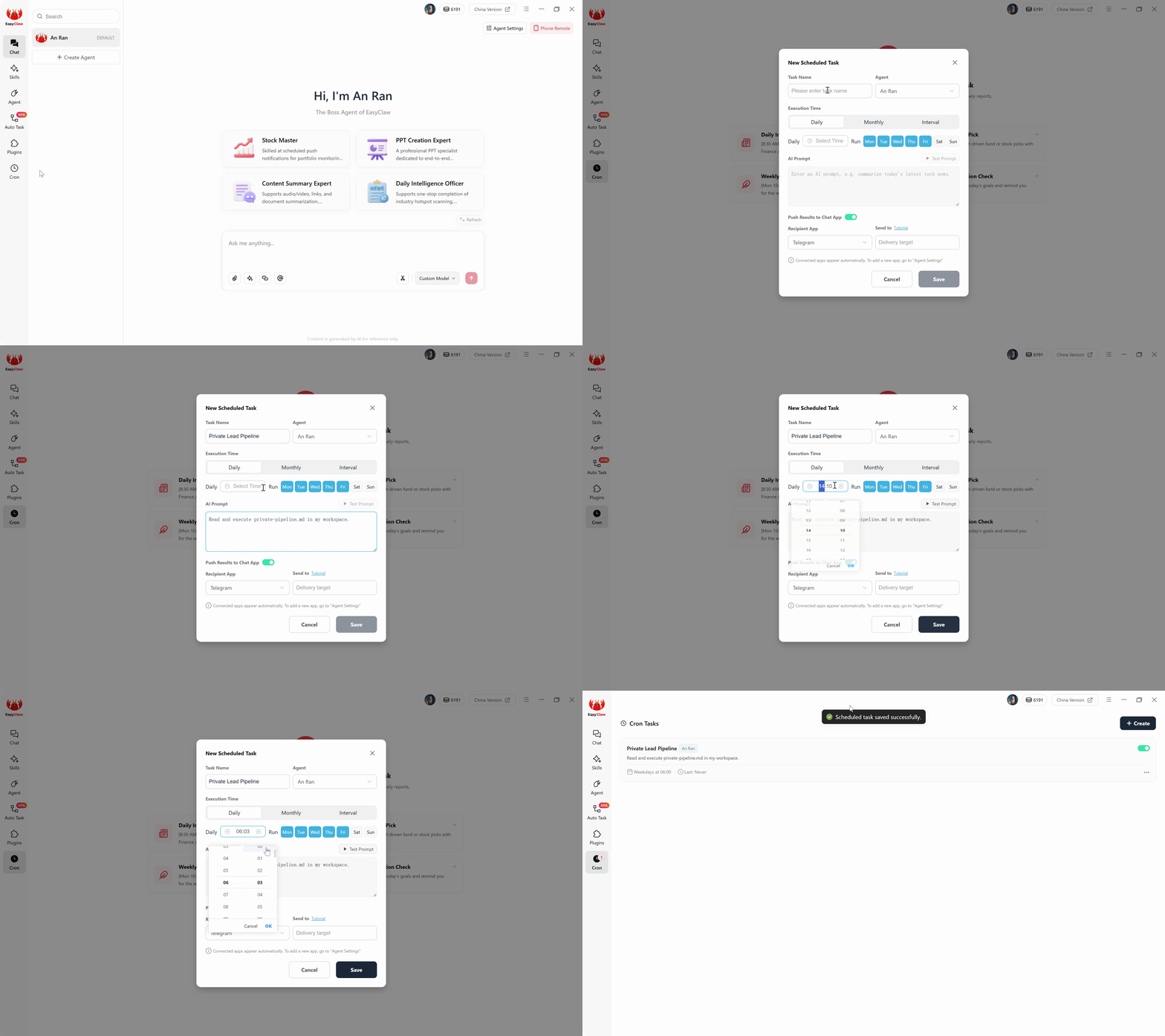
Observe cómo su canal privado se ejecuta completamente localmente: el agente controla su navegador para descubrir, enriquecer y calificar clientes potenciales sin que un solo byte salga de su máquina.
Compliance Perks: Por qué local = puerto seguro legal
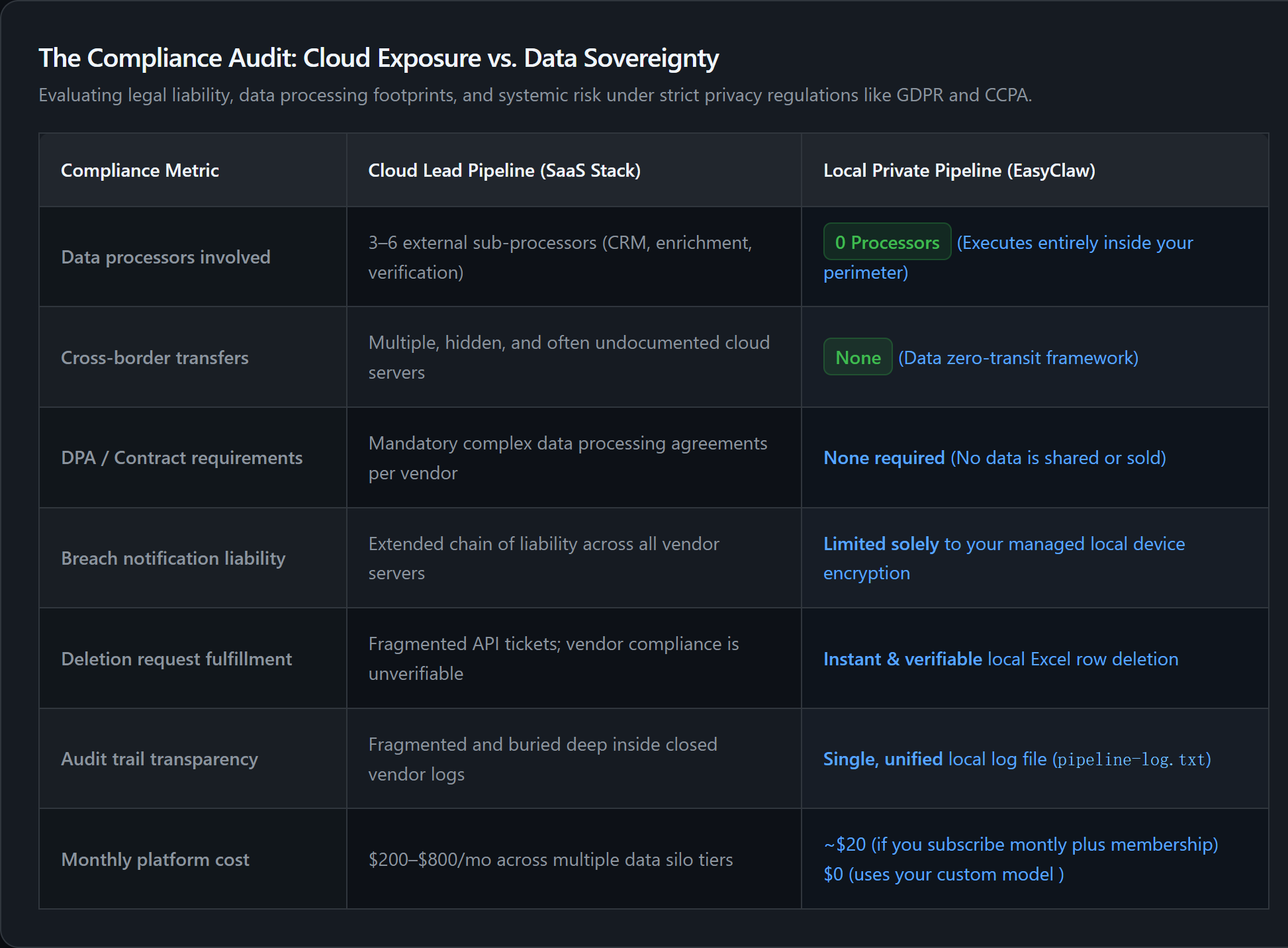
Las pilas de clientes potenciales en la nube crean transferencias de datos indocumentadas entre jurisdicciones; La canalización local de EasyClaw elimina la responsabilidad GDPR/CCPA al mantener todos los datos en su disco duro.
El RGPD no prohíbe recopilar información de contacto comercial de fuentes públicas. Lo que regula es lo que sucede después del cobro. La carga a un servicio en la nube inicia una transferencia de datos: necesita una base legal, un DPA, documentación en sus registros de actividades de procesamiento y verificación de la participación del marco de transferencia de datos del procesador. Si el encargado del tratamiento sufre una infracción, deberá notificarlo a los interesados y a la autoridad de control en el plazo de 72 horas.
Un oleoducto local evita cualquier obligación porque no se produce ninguna transferencia. No hay ningún procesador con quien contratar. No hay transferencia transfronteriza de documento. No hay incumplimiento de terceros que informar. Cuando un cliente potencial ejerce su derecho de acceso, abre un archivo Excel local. Cuando ejercitan la eliminación, eliminas una fila y desaparece. Todo el ciclo de vida de cumplimiento se reduce a operaciones de archivos locales, que no están reguladas por GDPR porque no involucran datos personales que dejen su control físico directo.
| Factor de cumplimiento | Tubería basada en la nube | Canalización local EasyClaw |
|---|---|---|
| Data Processors | 3-5 proveedores externos | Zero: se ejecuta en su hardware |
| DPAs Required | One per vendor | None |
| Cross-Border Transfers | Multiple: a menudo indocumentados | Zero |
| Breach Notification Chain | Complex: depende del proveedor | None: no es posible una infracción por parte de terceros |
| Deletion Request Handling | Ticket to vendor, uncertain purge | Delete local row: instantáneo y completo |
| GDPR Fine Exposure | Up to 4% of global revenue | Negligible: transferencias no reguladas |
Por qué EasyClaw es la única arquitectura de generación de leads segura según el RGPD
Las herramientas de liderazgo basadas en la nube construyeron un modelo de negocio sobre dos suposiciones: que agregar datos públicos de forma centralizada era la única forma escalable y que el cumplimiento era una sobrecarga manejable. Both assumptions have collapsed. EasyClaw descubre clientes potenciales de fuentes públicas, los enriquece a través de su navegador, los califica en su máquina y los almacena en un archivo local: cero procesadores de datos, cero transferencias transfronterizas, cero cadenas de notificación de infracciones.
Sin proveedores de enriquecimiento, sin API de verificación, sin almacenamiento en la nube. Sus responsabilidades como controlador de datos terminan en su disco duro.
Sin transferencias transfronterizas. No hay DPA para firmar. No hay procesadores para auditar. Diseñado para el espacio que el RGPD deja solo.
Solicitud de eliminación del interesado = eliminar una fila en un archivo Excel local. Sin boletos de proveedores. No hay almacenamiento en la nube replicado que depurar.
Cuando los datos nunca salen de su máquina, no hay ningún servidor de terceros que pueda violar. Tu perímetro de seguridad es tu propio dispositivo.
Ventajas
- Cumple con el RGPD, la CCPA y la ley de privacidad global desde su diseño
- DPA de proveedores de Zero para gestionar
- Los datos de los clientes potenciales nunca tocan la infraestructura externa
- El oleoducto funciona sin internet (para fases locales)
- Nivel gratuito disponible
Limitaciones
- El enriquecimiento basado en navegador requiere Internet
- No apto para bases de datos de millones de registros.
Preguntas frecuentes sobre canalizaciones privadas de generación de leads
Lo que acabas de construir
Las herramientas de generación de leads basadas en la nube construyeron un modelo de negocio sobre dos suposiciones que ya no son ciertas. La primera: agregar datos públicos en una base de datos centralizada era la única forma escalable de encontrar pistas sin un ejército de investigadores. El segundo: el cumplimiento de las normas de privacidad de datos era una sobrecarga manejable: una casilla de verificación que marcar, un DPA que firmar, un riesgo que aceptar.
Los agentes de IA de escritorio de Both assumptions have collapsed. pueden agregar datos públicos de las mismas fuentes que las bases de datos pagas, según un cronograma y sin infraestructura centralizada. Y el cumplimiento no es un gasto general manejable cuando las multas comienzan en el 4% de los ingresos globales; es un riesgo existencial mitigado al eliminar las transferencias de datos que crean responsabilidad.
Su canal privado descubre clientes potenciales de fuentes públicas, los enriquece a través de su navegador, los califica en su máquina y los almacena en un archivo local. Encargados del tratamiento de datos Zero. Transferencias transfronterizas Zero. Zero viola las cadenas de notificación. Para los equipos de cumplimiento, los departamentos legales y los líderes de ingresos en los mercados regulados por el GDPR en toda Europa, las organizaciones regidas por la CCPA en California y las empresas preocupadas por la privacidad en todo el mundo, esta arquitectura no sólo es más barata que la alternativa de la nube: es estructuralmente más segura. Y en un entorno donde la responsabilidad por la privacidad de los datos se mide en porcentajes de los ingresos, la seguridad estructural es el único que cuenta.