


L’errore costoso che ogni leader del Revenue fa
La costruzione di una moderna pipeline in uscita di solito inizia con un errore molto costoso. Un leader del settore revenue decide di ampliare il proprio raggio d'azione e inizia immediatamente ad assemblare uno stack software basato su cloud: uno strumento di web scraping per 150 dollari al mese, un'API di verifica e-mail per 200 dollari e una piattaforma middleware per incollare i dati grezzi nel CRM per altri 100 dollari. Prima che venga inviata una singola e-mail fredda, il team di vendita ha costruito un'infrastruttura di drenaggio fragile e sigillata con nastro adesivo $ 500 al mese dal budget operativo.
Questa è la triste realtà della moderna economia SaaS. Non possiedi il tuo sistema di lead generation. Lo stai affittando, pezzo per pezzo, da una mezza dozzina di fornitori di servizi cloud. Il loro modello finanziario è intrinsecamente ostile alla crescita: ogni volta che i loro server recuperano un profilo, verificano un dominio o sincronizzano una riga, viene detratta una frazione di un centesimo. Se la tua strategia ha successo e devi elaborare diecimila potenziali clienti invece di cento, la fattura del tuo software sale alle stelle. Sei punito finanziariamente per il ridimensionamento.
Ma la potenza di calcolo necessaria per costruire un generazione automatica di lead la macchina è già sulla tua scrivania. Spostando l'esecuzione sull'hardware locale con EasyClaw, i team di crescita possono implementare un assistente di ricerca autonomo e implacabile che gestisce un browser web, va a caccia di potenziali clienti e verifica i dati con un costo marginale pari a zero.
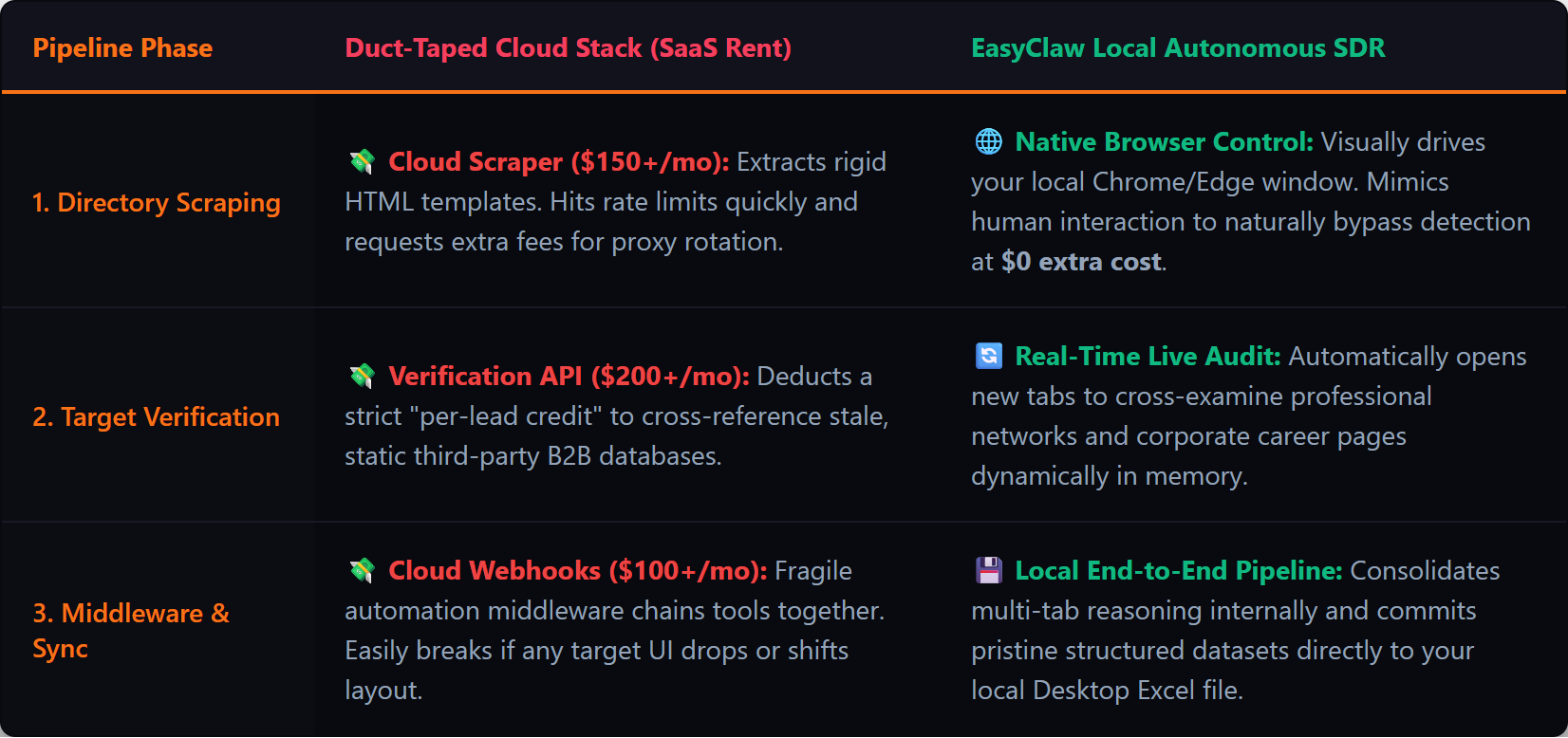
Gli stack SaaS cloud tradizionali consumano oltre 500 dollari al mese con prezzi per lead; L'architettura locale di EasyClaw elimina ogni livello di tale struttura dei costi.
Perché il Cloud SaaS fallisce come sistema di lead generation
I tradizionali raschiatori di nuvole sono ciechi e disconnessi. Si affidano a server headless che eseguono il ping dei database tramite API backend. Quando colleghi uno strumento di scraping a uno strumento di arricchimento tramite un webhook cloud, tratti i dati come una catena di montaggio di produzione: lo scraper estrae ciecamente un nome, lo passa all'arricchitore e l'arricchitore indovina le informazioni di contatto sulla base di database statici obsoleti.
EasyClaw elude completamente questa architettura frammentata automazione web visiva. Prende il controllo fisico del tuo browser Chrome o Edge locale. Colma il divario tra ambienti web caotici perché naviga visivamente, esattamente come un rappresentante umano dello sviluppo delle vendite. Può cercare in una directory di settore, aprire una nuova scheda per fare un riferimento incrociato a quella persona esatta su LinkedIn, aprire una terza scheda per verificare lo stato attuale delle assunzioni dell'azienda sulla pagina delle carriere e consolidare tutta quell'intelligenza contestuale in un'unica riga incontaminata sul tuo file Excel locale.
Quattro fasi per implementare il tuo motore di generazione automatica di lead
Phase 1: dotare il tuo agente delle giuste competenze
Anche l’automazione più intelligente richiede limiti operativi rigorosi. In EasyClaw, applicali abilitando il file Web Automation & Navigation abilità e Local File Processing abilità. Questi forniscono all'agente il vocabolario meccanico per eseguire complesse manovre del browser: aprire e chiudere in sicurezza le schede, gestire lo scorrimento infinito e scrivere output Excel. Fondamentalmente, stabiliscono le regole di ingaggio: l'agente è autorizzato a leggere testo pubblico e creare file sul desktop, ma è severamente vietato accedere a directory non autorizzate.
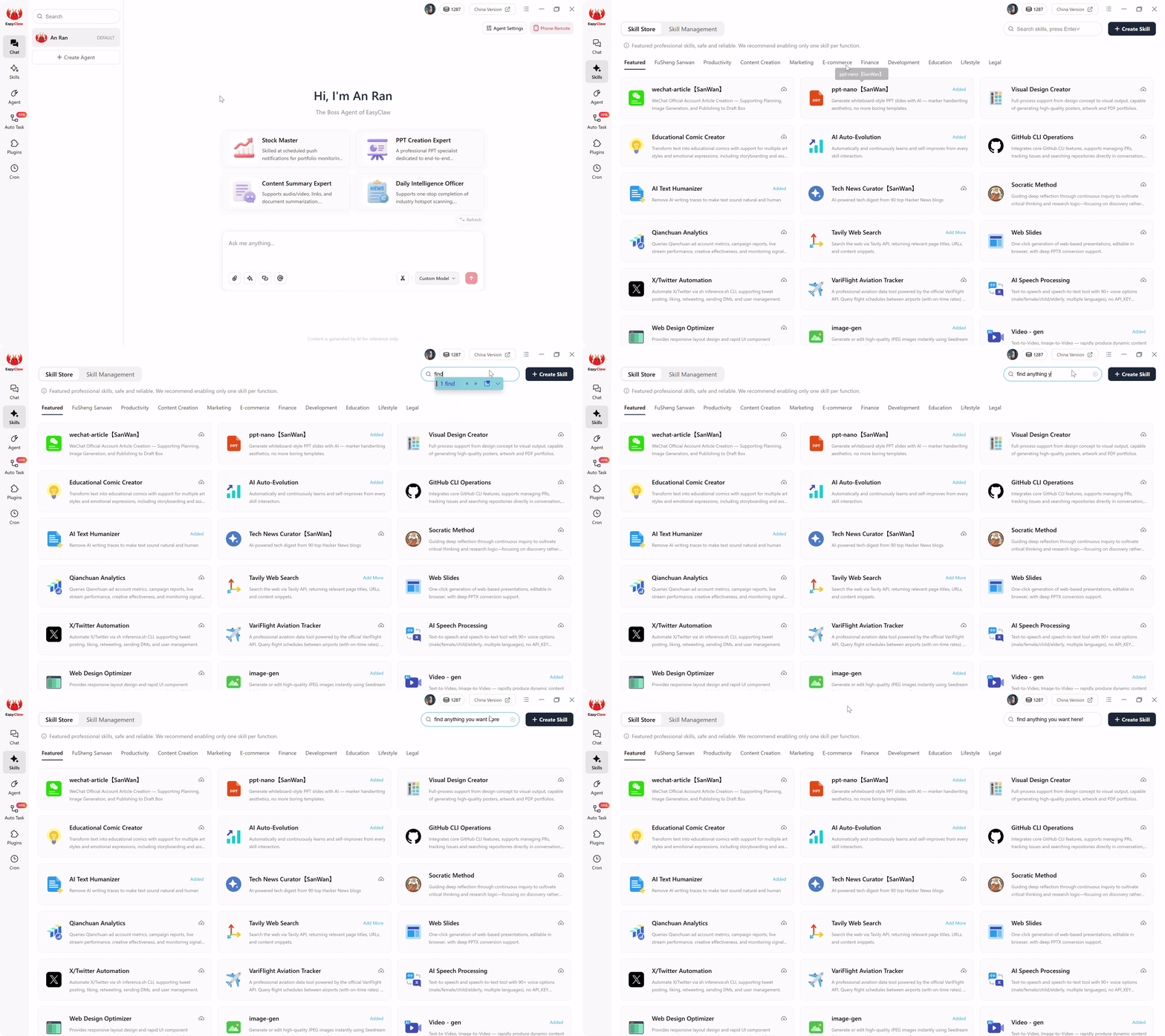
Abilita le competenze Web Automation ed Local File Processing per fornire al tuo agente il vocabolario meccanico per la navigazione nel browser e l'output Excel, con limiti operativi rigorosi.
Phase 2: scrittura del prompt per la generazione automatizzata di lead
Quando si sostituiscono tre diversi strumenti software con un unico agente locale, si articola chiaramente la logica operativa. In EasyClaw Auto Task interfaccia, presenti un'area di testo vuota e istruisci l'architetto AI utilizzando un inglese operativo altamente specifico. Un prompt pronto per la produzione definisce il percorso di navigazione del browser, la logica dei riferimenti incrociati a più schede, i campi di estrazione dei dati e il formato di output, il tutto in un unico paragrafo.
Phase 3: L'esecuzione invisibile e l'economia a costo zero
Il vero splendore si rivela durante l'esecuzione. Se utilizzassi uno strumento AI basato su cloud, ogni navigazione verso un nuovo sito Web aziendale richiederebbe l'acquisizione dell'intero codice HTML, l'invio del carico utile a un server LLM esterno e la masterizzazione di token costosi solo per chiedere "dov'è il nome del CTO?" Farlo per migliaia di lead costa una fortuna in commissioni API ricorrenti. EasyClaw elimina completamente questa tassa sul cloud: il costoso ragionamento dell'intelligenza artificiale è avvenuto una volta durante la compilazione. Lo script locale subentra in modo nativo, analizzando vari layout di siti Web utilizzando modelli di estrazione leggeri incorporati direttamente in memoria. La tua estrazione quotidiana viene bruciata zero LLM tokens.
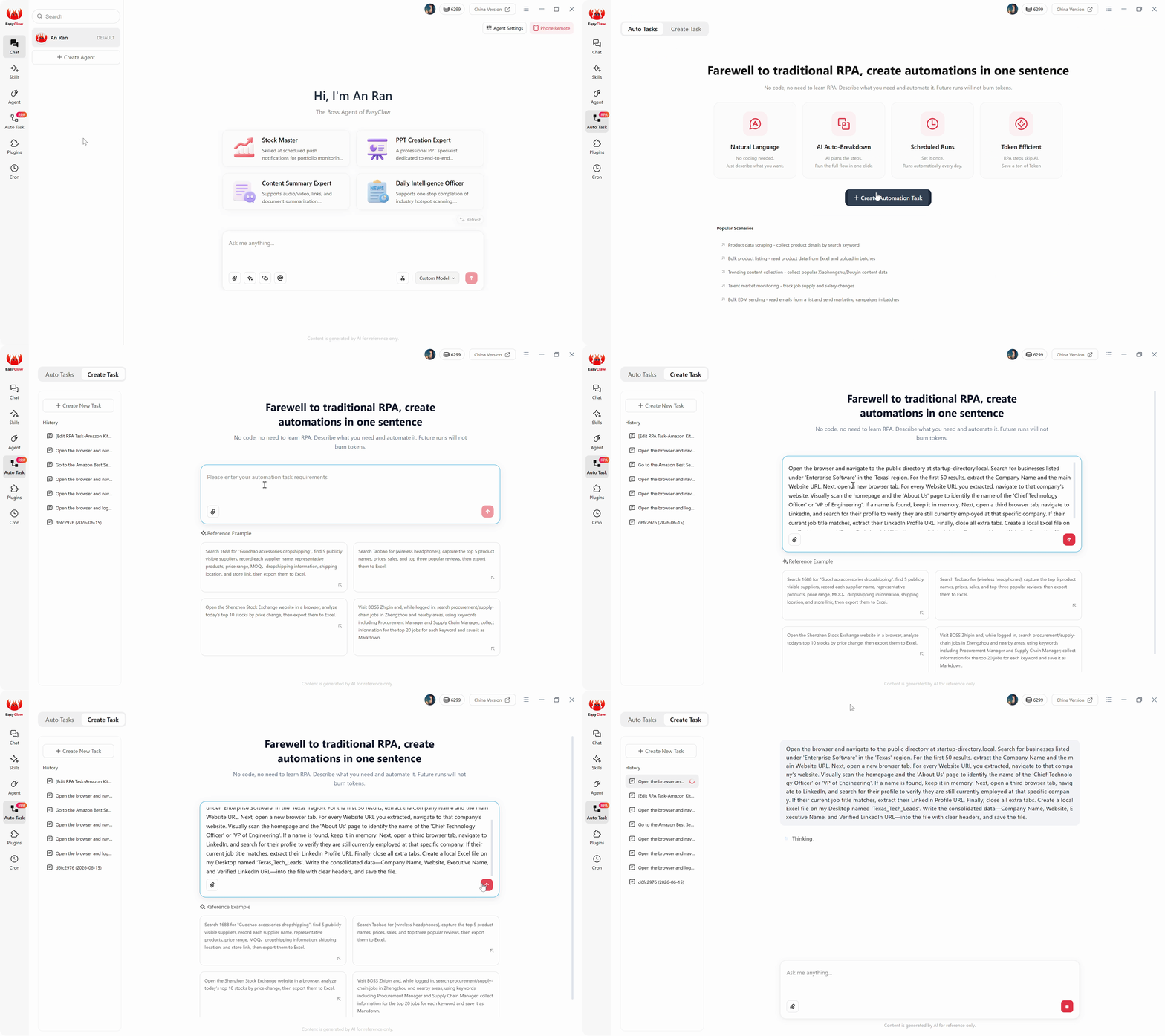
L'agente esegue un'estrazione completamente locale: guidando il tuo browser reale su più schede, facendo riferimenti incrociati ai dati e consolidandoli in Excel, il tutto a un costo marginale per lead pari a zero.
Phase 4: pianificazione per il funzionamento a mani libere
Passare alla sezione Cron. Crea un'attività denominata "Prospezione notturna" impostata per essere eseguita ogni giorno alle 4:00. Collega la pianificazione con un messaggio simile "Esegui l'attività automatica. Deduplica rispetto al file di ieri. Conta il totale dei profili verificati." Attiva/disattiva i risultati push sulla tua app di chat: Slack, WhatsApp o Telegram. Quando il direttore delle vendite accede alle 8 del mattino, visualizza un messaggio: "Prospezione notturna completata. 45 lead CTO nuovi e completamente verificati estratti. File Excel salvato". La pipeline è piena, verificata in tempo reale e costa zero centesimi di commissione per lead.
Pro Tips from the Outbound Trenches
Daily Delta Architecture
Un errore comune è chiedere a un agente di raschiare un'intera directory ogni notte. Se una directory comprende 10.000 aziende, la rielaborazione è uno spreco enorme. Crea un "Delta giornaliero" nel tuo prompt: "Prima di navigare, aprire il file Master_Leads.xlsx locale. Fare riferimento incrociato ai nomi delle società. Ricercare solo le società non già presenti nel database principale." Ciò garantisce che l'agente elabori solo i dati nuovi, riducendo drasticamente i tempi di esecuzione.
Negative Keyword Filtering
Trovare una pista è metà dell'opera; assicurarsi che siano acquirenti qualificati è la vera sfida. Aggiungi il filtro del sentiment negativo: "Durante la scansione della pagina Informazioni o Notizie dell'azienda, se rilevi parole come 'Fallimento', 'Acquisita da' o 'Chiusura', interrompi immediatamente l'estrazione per quella società, scarta i dati e passa all'URL successivo." Ciò trasforma il tuo agente da un raccoglitore di dati in un qualificato qualificatore di vendita.
Ritmo del mimetismo umano
Gli algoritmi di sicurezza monitorano la velocità di cambio di contesto. Se una sessione apre un collegamento a una directory, apre immediatamente un sito Web aziendale e apre immediatamente LinkedIn: la piattaforma sa che si tratta di uno script. Iniettare attrito comportamentale: "Dopo aver estratto i dati dalla directory, attendere 3-6 secondi casuali prima di aprire la scheda del sito Web dell'azienda." Questi ritardi microscopici rendono le sessioni automatizzate indistinguibili da un ricercatore umano che esegue più attività su più monitor.
Perché EasyClaw sostituisce l'intero stack SaaS di lead generation
Per anni, i team delle operazioni fiscali hanno accettato un amaro compromesso: affittare una mezza dozzina di strumenti cloud, collegarli a fragili webhook e pagare tariffe mensili esorbitanti solo per accedere alle informazioni pubbliche. L'architettura local-first di EasyClaw elimina ogni livello di tale struttura dei costi.
EasyClaw distribuisce un implacabile SDR digitale che utilizza il tuo browser, salta da un motore di ricerca all'altro senza problemi, verifica l'occupazione in tempo reale e compila database strutturati incontaminati direttamente sul tuo disco rigido, senza un singolo abbonamento al middleware cloud.
Definisci il tuo ICP in un paragrafo. Imposta la pianificazione cron. Guarda il tuo stack SaaS gonfiato essere sostituito permanentemente da un motore di entrate sicuro e automatizzato.
L'agente apre Google Maps, il sito Web aziendale e LinkedIn in parallelo, consolidando tutta l'intelligence in un unico record arricchito.
Il ragionamento dell'intelligenza artificiale avviene una volta in fase di compilazione. Le esecuzioni giornaliere di estrazione utilizzano modelli locali: nessun token LLM, nessuna tariffa API.
I dati dei potenziali clienti non toccano mai un server di terze parti. La conformità al GDPR è integrata nell'architettura.
Risultati forniti a Slack, WhatsApp o Telegram: nessuna dashboard da controllare, nessun portale dei fornitori a cui accedere.
Pro
- Zero costi per lead: tutta l'elaborazione è locale
- Automazione web visiva basata sull'intelligenza artificiale su qualsiasi sito
- Arricchimento multi-sorgente senza crediti API
- Il comportamento simile a quello umano evita il rilevamento della piattaforma
- Livello gratuito disponibile: non è richiesta la carta di credito
Limitazioni
- Richiede l'installazione sul desktop (Mac/Windows)
- VPN consigliata per corse giornaliere ad alto volume
| Capacità | EasyClaw Pipeline locale | Stack SaaS cloud (Apollo + Clay + Zapier) |
|---|---|---|
| Monthly Cost | ✓ $0 (AI subscription only) | ✗ $300 – $800+ |
| Data Privacy | ✓ 100% locale: zero esposizione a terzi | ✗ Prospect data on multiple vendor servers |
| Enrichment Method | ✓ Real-time browser research | ~ Static database lookup (stale data) |
| Detection Risk | ✓ Residential IP, real browser fingerprint | ✗ Datacenter IPs, headless browsers |
Domande frequenti sulla generazione di lead tramite intelligenza artificiale locale
Secure Your Outbound Infrastructure
Per anni, i team delle operazioni fiscali hanno creduto che l’unico modo per costruire una pipeline affidabile fosse noleggiare una mezza dozzina di strumenti cloud, collegarli a fragili webhook e pagare tariffe di abbonamento esorbitanti per l’accesso alle informazioni pubbliche. Quella convinzione era il prodotto dei limiti tecnologici, non della realtà aziendale.
Costruire una macchina di prospezione prevedibile e ad alto volume non dovrebbe richiedere la cessione del budget operativo agli aggregatori cloud. Adottando un'architettura dell'interfaccia utente Web locale con EasyClaw, elimini le limitazioni delle API cloud e il decadimento dei database statici. Distribuisci un SDR digitale implacabile che utilizza il tuo browser, salta senza interruzioni tra i motori di ricerca, verifica l'occupazione in tempo reale e compila database strutturati incontaminati direttamente sul tuo disco rigido.
Definisci il tuo profilo cliente ideale in un unico paragrafo. Imposta la pianificazione cron. Guarda come il tuo enorme stack SaaS viene sostituito in modo permanente da un motore di entrate sicuro e automatizzato, per organizzazioni dalle startup della Silicon Valley alle agenzie di marketing europee fino agli esportatori manifatturieri asiatici.