


La metrica della vanità dei lead aziendali generici
La maggior parte dell'eredità generatore di elenchi di lead le piattaforme ottimizzano fortemente il volume del database piuttosto che la tempistica. Ti consegnano le dimensioni dell'azienda e i titoli di lavoro, quindi lasciano i tuoi rappresentanti dello sviluppo delle vendite a chiedersi perché i tassi di risposta alle email sono crollati.
Le recensioni, in particolare le valutazioni storiche a 1 stella e 2 stelle, sono fondamentalmente diverse perché catturano la pura frustrazione durante una valutazione attiva del software o un ciclo di rinnovo. I dati demografici ti dicono solo che un potenziale cliente esiste in natura.
L'intento comportamentale ti dice esattamente cosa non funziona nel loro attuale stack tecnologico e cosa l'acquirente chiede di risolvere. Quando un dirigente si lamenta di improvvisi aumenti dei prezzi, mancate integrazioni di prodotti o pessima assistenza clienti, sta attivamente cercando una strategia di uscita.
Ecco perché automatizzare l’estrazione dei clienti insoddisfatti rappresenta la massima modernità generatore di elenchi di lead aggiornamento. Colma il divario tra il rumore del mercato e un flusso strutturato ad alto intento lead di vendita b2b che il tuo team in uscita può chiudere.
Il motore di generazione di lead ad alto intento (logica visiva)
La creazione di questo motore in uscita richiede una pipeline di dati strettamente coordinata che passi senza soluzione di continuità dalla scoperta all'arricchimento diretto.
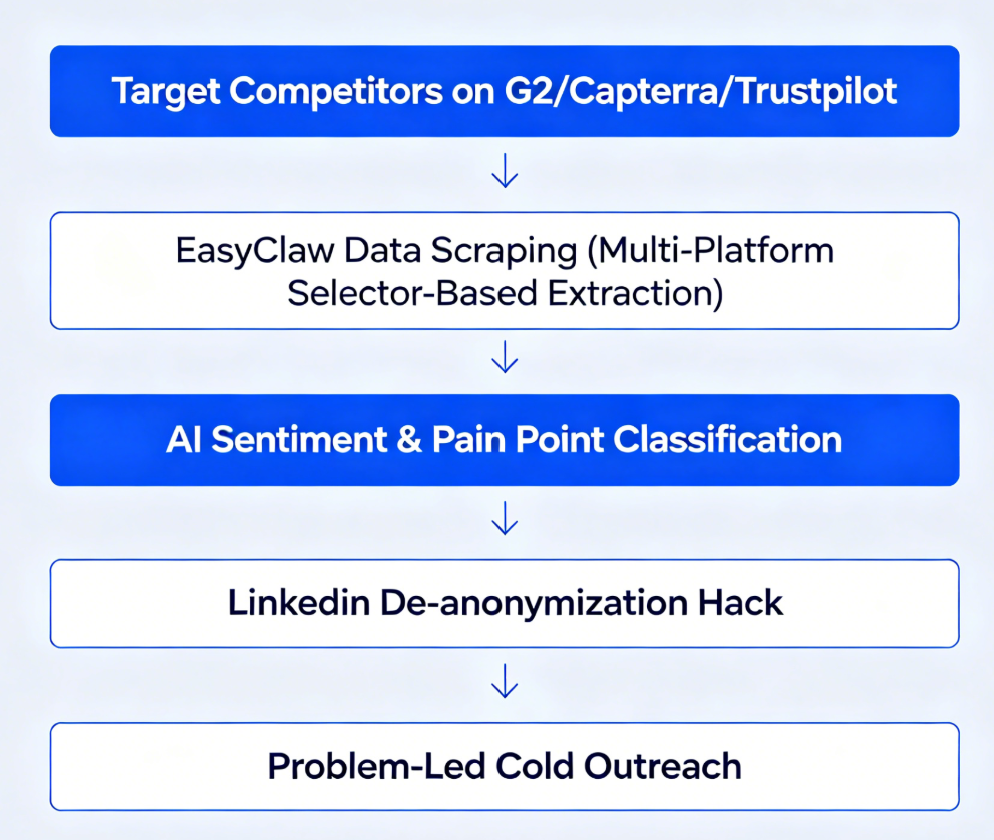
La chiave tecnica sottostante è che ogni passaggio a valle dipende interamente da strutture di dati a monte pulite. Se il tuo processo di scraping restituisce blocchi di testo disordinati o troncati, il tuo livello di intelligenza artificiale diventa un motore di ipotesi. Quando il tuo database produce variabili chiare, il tuo raggio d'azione mirato si converte a un tasso significativamente più elevato.
Passaggio 1: mappa le impronte della concorrenza in cui si raggruppano feedback negativi
Devi iniziare mappando i profili dei tuoi concorrenti diretti su G2, Capterra e Trustpilot, poiché i modelli di recensione differiscono notevolmente in base alla piattaforma. Qui non stai solo contando le medie delle stelle; stai individuando sistematicamente le fonti URL in cui il feedback negativo si ripete con trigger prevedibili.
Concentra la tua ricerca iniziale sulle sezioni di revisione che contengono discussioni granulari relative ai flussi di lavoro dei prodotti, alle integrazioni software specifiche e alle modifiche alla fatturazione. Su piattaforme come G2 e Capterra, i dati sugli intenti più utilizzabili vengono visualizzati all'interno dei blocchi di testo espliciti Pro e Contro.
Una volta identificati quali URL specifici della concorrenza producono la più alta densità di recensioni negative, li aggiungi direttamente alla coda di raccolta dati. Ciò ti garantisce di spendere risorse tecniche solo sugli URL che fungono da attivi generatore di elenchi di lead per la frustrazione del mercato.
Passaggio 2: automatizza l'estrazione delle revisioni batch con EasyClaw
Dopo che le impronte di destinazione sono state completamente mappate, puoi automatizzare il processo di estrazione utilizzando EasyClaw per garantire che il sistema raccolga i campi dati strutturati secondo una pianificazione ricorrente. È necessario acquisire i metadati dichiarati dall'autore, il testo grezzo della recensione, la valutazione in stelle, la data di pubblicazione e qualsiasi suggerimento aziendale contestuale.
Di seguito è riportata una configurazione JSON pronta per la produzione progettata per l'ambiente dell'agente browser di EasyClaw. Si rivolge alle classi di elementi di revisione standard, filtra il rumore ad alta stella alla fonte e gestisce l'impaginazione di più pagine in modo sicuro.
{
  "name": "easyclaw_competitor_review_batch",
  "mode": "browser_agent",
  "target": {
    "startUrls": [
      "https://www.g2.com/products/COMPETITOR-REVIEWS",
      "https://www.trustpilot.com/review/COMPETITOR",
      "https://www.capterra.com/p/COMPETITOR-REVIEWS"
    ]
  },
  "scrape": {
    "items": {
      "reviewCards": {
        "selector": "div[data-testid='review-card'], article.review, div[class*='review']",
        "fields": {
          "rating": { "selector": "[data-testid='rating'], .star-rating", "type": "number" },
          "reviewText": { "selector": ".review-body, [class*='review-text']", "type": "text" },
          "prosConsText": { "selector": ".pros-cons, .pros, .cons", "type": "text", "optional": true },
          "date": { "selector": "time, .date", "type": "date" },
          "authorMeta": { "selector": ".reviewer, .author, [class*='reviewer']", "type": "text", "optional": true }
        }
      }
    },
    "filter": {
      "where": [
        { "field": "rating", "op": "<=", "value": 2 }
      ]
    },
    "pagination": {
      "strategy": "click_next_or_next_page",
      "nextSelector": "a[aria-label*='Next'], button[aria-label*='Next']",
      "maxPages": 40
    }
  },
  "output": {
    "format": "jsonl"
  },
  "antiBot": {
    "enableStealth": true,
    "humanLike": { "mouseMoves": true, "scroll": true, "jitterMs": [120, 420] }
  }
}
L'esecuzione di questo script esatto su un ciclo di automazione settimanale garantisce che il tuo CRM riceva un feed costante di dati aggiornati. Una volta che EasyClaw gestisce il bypass anti-bot e genera file JSONL puliti, sei pronto per passare i payload al livello di machine learning.
Passaggio 3: esegui l'analisi del sentiment dell'intelligenza artificiale per isolare i lead con intenzioni elevate
Le stringhe di revisione grezze devono essere trasformate in categorie di difficoltà altamente strutturate prima che i tuoi rappresentanti di vendita possano utilizzarle. La pipeline più efficiente applica un filtro AI che estrae dalla descrizione l'intento principale del reclamo, la gravità dell'impatto aziendale e le lacune specifiche del prodotto.
È possibile passare i campi di testo raschiati direttamente in un LLM utilizzando un blocco prompt forzato da schema altamente restrittivo progettato per eliminare le allucinazioni.
System: You are an enterprise B2B buyer-intent classifier. Extract complaint intent from negative software reviews. Only use the provided text.
Task: Given reviewText and prosConsText, classify the complaint into this exact JSON schema:

{
  "primaryComplaintCategory": "pricing|bugs|integrations|support|usability|missingFeatures",
  "impactSummary": "Brief summary of business damage mentioned",
  "urgencySignals": ["recentMigrationIssues","renewalRisk","timeLoss","billingSurprise"],
  "buyerStage": "evaluating|migrating|renewalConcern|alreadyUsing",
  "recommendedOutreachAngle": "switchingAlternative|integrationFix"
}

User Input:
reviewText: {{reviewText}}
prosConsText: {{prosConsText}}
Le variabili JSON risultanti ti consentono di segmentare automaticamente gli elenchi di destinazione in base alla vulnerabilità del software. Quando sai che un potenziale cliente sta subendo un guasto tecnico a causa dell'API non funzionante di un concorrente, la tua soluzione alternativa diventa immediatamente convincente.
Passaggio 4: l'hack della de-anonimizzazione e la sensibilizzazione del pivot perfetto
Molte recensioni di alto valore su G2 sono pubblicate in forma anonima, mostrando solo etichette di testo come "Utente verificato nel settore della logistica, mercato medio (51-200 dipendenti)". Puoi facilmente violare questo anonimato trattando questi parametri pubblici come una chiave crittografica precisa su LinkedIn.
Ad esempio, se una recensione anonima a 2 stelle lamenta un'integrazione interrotta di Salesforce in una data specifica, puoi fare un riferimento incrociato su LinkedIn per le aziende all'interno di quella fascia esatta di dipendenti logistici. Quindi filtri per personaggi target come Head of Sales Ops che hanno aggiornato il loro profilo attorno a quella sequenza temporale di revisione.
Una volta identificato il probabile decisore, i tuoi messaggi in uscita devono ruotare agevolmente attorno alla categoria del problema senza rivelare i meccanismi di estrazione dei dati sottostanti. Invece di dire che hai seguito la loro recensione, apri la tua presentazione facendo riferimento alla diffusa frustrazione del mercato per il difetto specifico del prodotto di quel concorrente.
Una struttura naturale del messaggio afferma che diverse aziende di logistica nel livello di 200 dipendenti sono migrate sulla tua piattaforma questo mese a causa di continui errori di sincronizzazione Salesforce. Ciò posiziona il tuo prodotto come un salvatore tempestivo piuttosto che come una presentazione di vendita aggressiva e non invitata.
Generic Databases rispetto allo scraping delle revisioni basate sugli intenti
Comprendere le differenze operative evidenzia perché i dati sulle intenzioni superano il targeting demografico standard in ogni metrica.
| Categoria metrica | Database di lead generici | Scraping delle revisioni basate sugli intenti |
|---|---|---|
| Data Freshness | Static (Updated quarterly or annually) | Real-time (Captured within hours of posting) |
| Buying Trigger | Inferred based on broad title/funding shifts | Explicitly stated product and support pain |
| Email Reply Rates | Low (Typically under 1-3% due to saturation) | High (Often 12-25% due to radical relevance) |
| Sales Cycle Velocity | Slow (Requires educating a cold contact) | Fast (Buyer sta cercando attivamente l'uscita dalla piattaforma) |
| Pipeline Predictability | Unpredictable volume chasing | Consistent stream linked to fallimenti dei concorrenti |
Uscire da una situazione statica generatore di elenchi di lead verso un flusso di lavoro dinamico di web scraping cambia radicalmente l'efficienza dell'acquisizione. Garantisce che il tuo team SDR spenda energie solo comunicando con potenziali clienti che attualmente avvertono il dolore di un prodotto inadeguato.
Seamless EasyClaw Integration
Questo growth hack raggiunge il massimo ROI quando la raccolta dei dati, l'emulazione del browser e la rotazione dei proxy sono centralizzati all'interno di un'unica piattaforma aziendale. EasyClaw fornisce l'esatta infrastruttura di scraping necessaria per monitorare contemporaneamente G2, Capterra e Trustpilot senza infrangere le pesanti difese anti-bot.
Standardizzando gli elementi grezzi di revisione in schemi prevedibili, EasyClaw mantiene la pipeline di dati upstream completamente stabile per lunghi periodi. Questo flusso costante di dati trasforma il tuo movimento verso l'esterno in una macchina di intenti sempreverde che cattura gli acquirenti mentre sono ancora frustrati.
Invece di eseguire esportazioni manuali di dati che diventano rapidamente obsolete, puoi collegare questi flussi di lavoro automatizzati direttamente al tuo stack cloud. Puoi rivedere oggi stesso i modelli di scraping di revisione predefiniti sulla piattaforma EasyClaw o richiedere facilmente una demo di ingegneria di crescita in tempo reale su misura.
Conclusione e CTA attuabile
Vincere nel moderno panorama B2B non è più una questione di trovare account; è una corsa per identificare l’urgenza attiva del mercato. Affidarsi al generico contatti commerciali senza chiari indicatori comportamentali porta a bassi parametri di risposta e a una prevedibile stagnazione della pipeline.
Estraendo le recensioni negative della concorrenza tramite flussi di lavoro automatizzati, eseguendole attraverso un'analisi strutturata del sentiment e prendendo di mira le personas implicite, si generano tassi di conversione elevati lead di vendita b2b.
Lascia che EasyClaw gestisca il pesante lavoro tecnico dell'estrazione web multipiattaforma e della normalizzazione dei dati per la tua azienda. Questa settimana implementa un flusso di lavoro automatizzato per lo scraping delle revisioni per acquisire gli account più insoddisfatti dei tuoi concorrenti prima che cerchino altrove.