


A mentira de seis dígitos das plataformas de automação de marketing
Marketo e HubSpot convenceram toda uma geração de profissionais de marketing de que geração de demanda a automação requer um orçamento de software de seis dígitos. A narrativa: você precisa de uma plataforma de automação de marketing para captura de formulários, um mecanismo de pontuação de leads para separar os clientes potenciais dos desocupados, um sistema de incentivo por e-mail para fornecer conteúdo por gotejamento e integração de CRM para entregar leads qualificados às vendas. Cada recurso está por trás de um nível de preços – a captura de formulários no Professional, a pontuação de leads requer o Enterprise, o construtor de fluxo de trabalho visual tem um custo extra. No momento em que você tiver um funcional estratégia de geração de demanda que captura, qualifica e estimula leads, você está pagando US$ 800 a US$ 3.000/mês – e não gastou um dólar em conteúdo que realmente gerasse demanda.
O segredo sujo: a funcionalidade central da automação de marketing não é tecnologicamente complexa. O envio de um formulário dispara um gatilho. O gatilho avalia as condições. Se as condições corresponderem, um email será enviado. Caso contrário, o lead espera. Esta é uma declaração se-então com uma API de e-mail anexada - e a indústria convenceu com sucesso os compradores de que vale a pena pagar a hipoteca todos os meses.
Evoluindo das regras para a geração de demanda baseada em IA
As plataformas de automação de marketing operam em árvores de decisão: se um lead baixar o guia de preços, adicione 10 pontos. Se a pontuação ultrapassar 50, envie um convite de demonstração. Se eles não abrirem dentro de 3 dias, mova-os para o reengajamento. Cada regra requer configuração manual e as regras interagem de maneiras que se tornam exponencialmente mais difíceis de gerenciar. Adicione uma terceira faixa de incentivo para o lançamento de um novo produto e você estará desvendando condições que podem enviar acidentalmente e-mails de lançamento de produto para alguém que cancelou a assinatura de atualizações de produtos.
EasyClaw substitui a árvore de decisão por uma camada de raciocínio de IA que avalia cada lead de forma holística. O agente lê o perfil da empresa do lead, o cargo, o conteúdo específico com o qual ele se envolveu, como encontrou você e quaisquer interações anteriores com a marca. Em seguida, ele faz um julgamento – da mesma forma que um profissional de marketing humano faria – sobre onde esse lead se situa na jornada de compra. Um vice-presidente de engenharia de uma empresa de SaaS com 200 pessoas que baixou um white paper técnico obtém um caminho de criação diferente de alguém que clicou em um anúncio do LinkedIn e deixou um e-mail genérico. A IA reconhece essa diferença porque raciocina sobre o contexto e não soma uma pontuação.
Lançamento em 3 etapas: geração automatizada de demanda em seu desktop
Etapa 1: Habilitar habilidades Browser Tool e XLSX
Habilitar Browser Tool para monitorar canais de entrada – verificar painéis de envio de formulários, verificar caixas de entrada em busca de respostas, revisar notificações sociais – e pesquisar leads durante a qualificação. Habilitar XLSX para ler bancos de dados de leads existentes, escrever novas capturas e atualizar status de criação. Se a criação envolve o envio de e-mails diretamente, Browser Tool cuida da composição e do envio por meio de seu Gmail ou Outlook real com ritmo apropriado.
Etapa 2: Deixe a IA gerar seu script de pipeline de geração de demanda
Abra o chat e descreva seus canais de entrada (painéis de formulário, caixa de entrada de e-mail, análise de conteúdo, menções sociais), critérios ICP em detalhes, nutrir preferências de conteúdo e regras de transferência de CRM. A IA gera um script que abrange: captura de sinal de entrada em todos os canais, qualificação de IA nas categorias MQL/Assinante/Não adequado com resumos apoiados por pesquisas, geração de conteúdo personalizado referenciando o comportamento específico de cada lead e transferência estruturada de CRM com rastreamento de status.
O script de pipeline de geração de demanda gerado por IA cobre captura de entrada, qualificação de IA, conteúdo de incentivo personalizado e transferência de CRM.
O pipeline não registra pontuações de leads em um banco de dados. Ele pesquisa, raciocina e decide - da mesma forma que um gerente de marketing faria, não da mesma forma que uma regra de fluxo de trabalho faria. Essa é a diferença entre automação de marketing e uma verdadeira estratégia de geração de demanda alimentado por IA.
Etapa 3: Agendar e calibrar
Crie um Cron job "Pipeline de geração de demanda" - de hora em hora para campanhas pagas que geram tráfego consistente, a cada 2 a 4 horas para entrada orgânica. Incitar: "Leia e execute demand-gen-pipeline.md em meu espaço de trabalho." Run draft-only mode para a primeira semana - revise cada mensagem de incentivo e decisão de qualificação antes de permitir que o agente envie diretamente. Depois de confiar no julgamento da IA (2 a 3 ciclos de revisão manual), mude para o modo de envio.
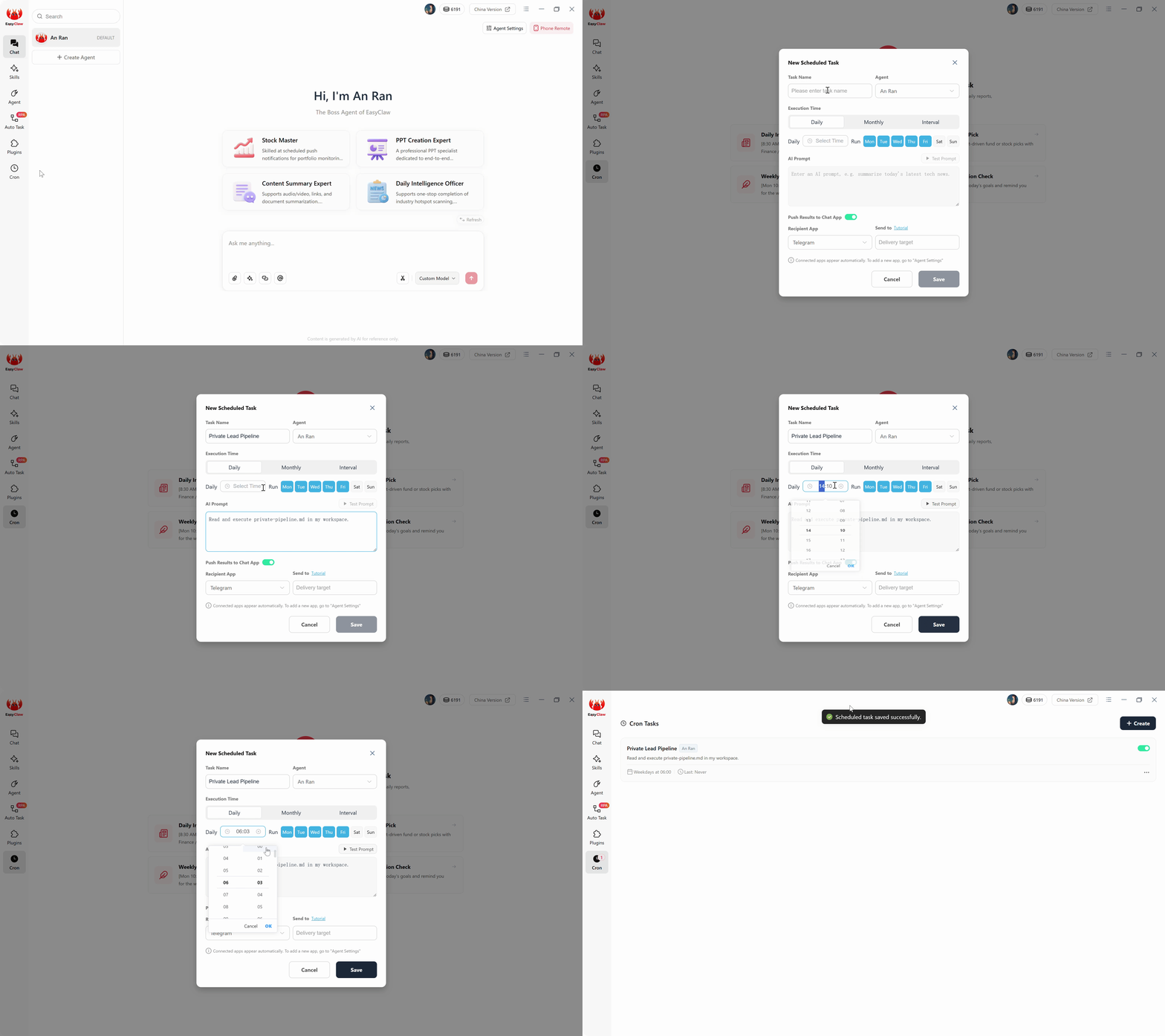
Crie um Cron job que execute o pipeline de geração de demanda de acordo com uma programação – de hora em hora para campanhas pagas, a cada 2 a 4 horas para entrada orgânica.
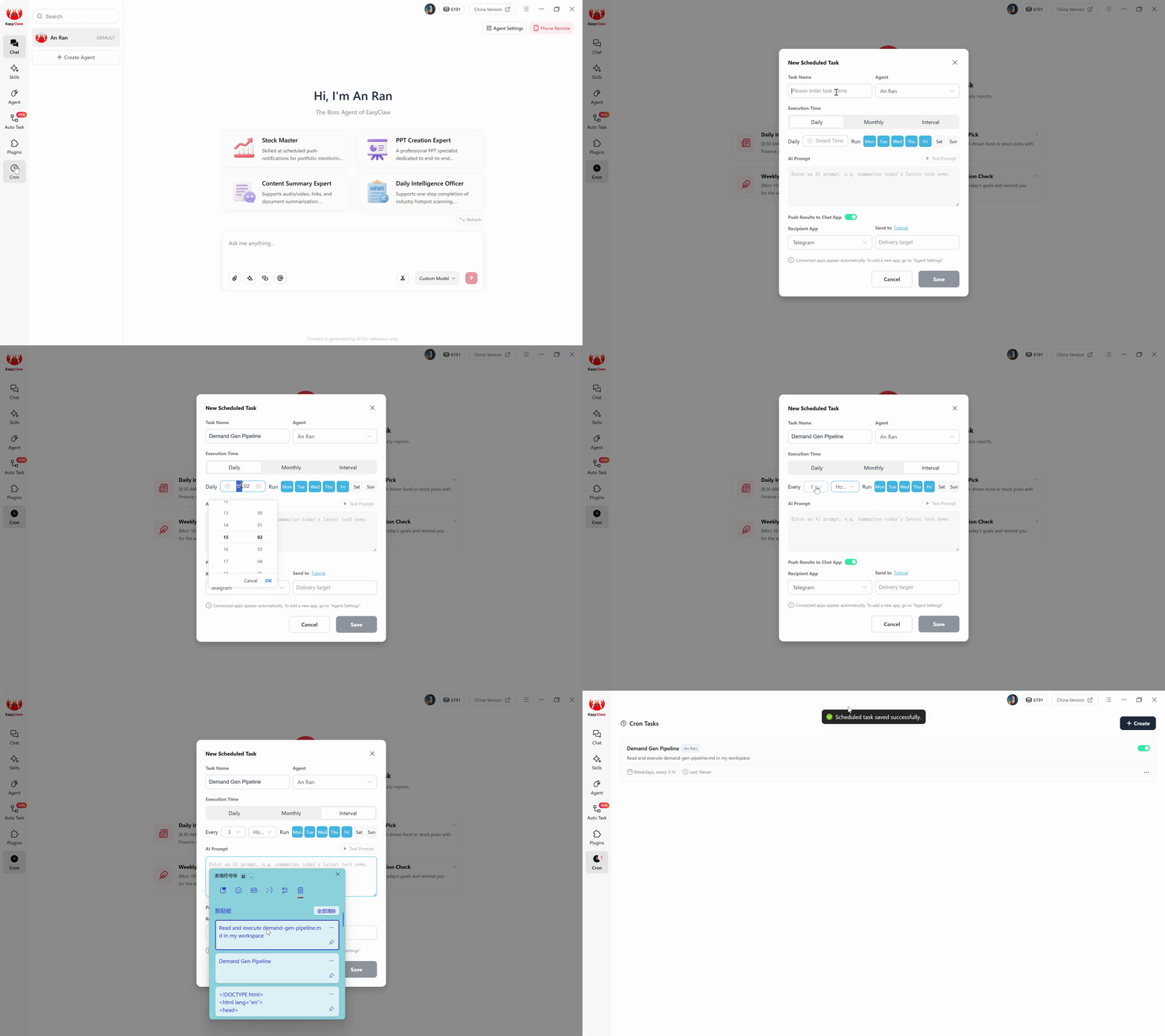
Revise os resultados da execução do pipeline – MQLs qualificados, mensagens de incentivo enviadas e leads sincronizados com o CRM, todos visíveis em seu painel.
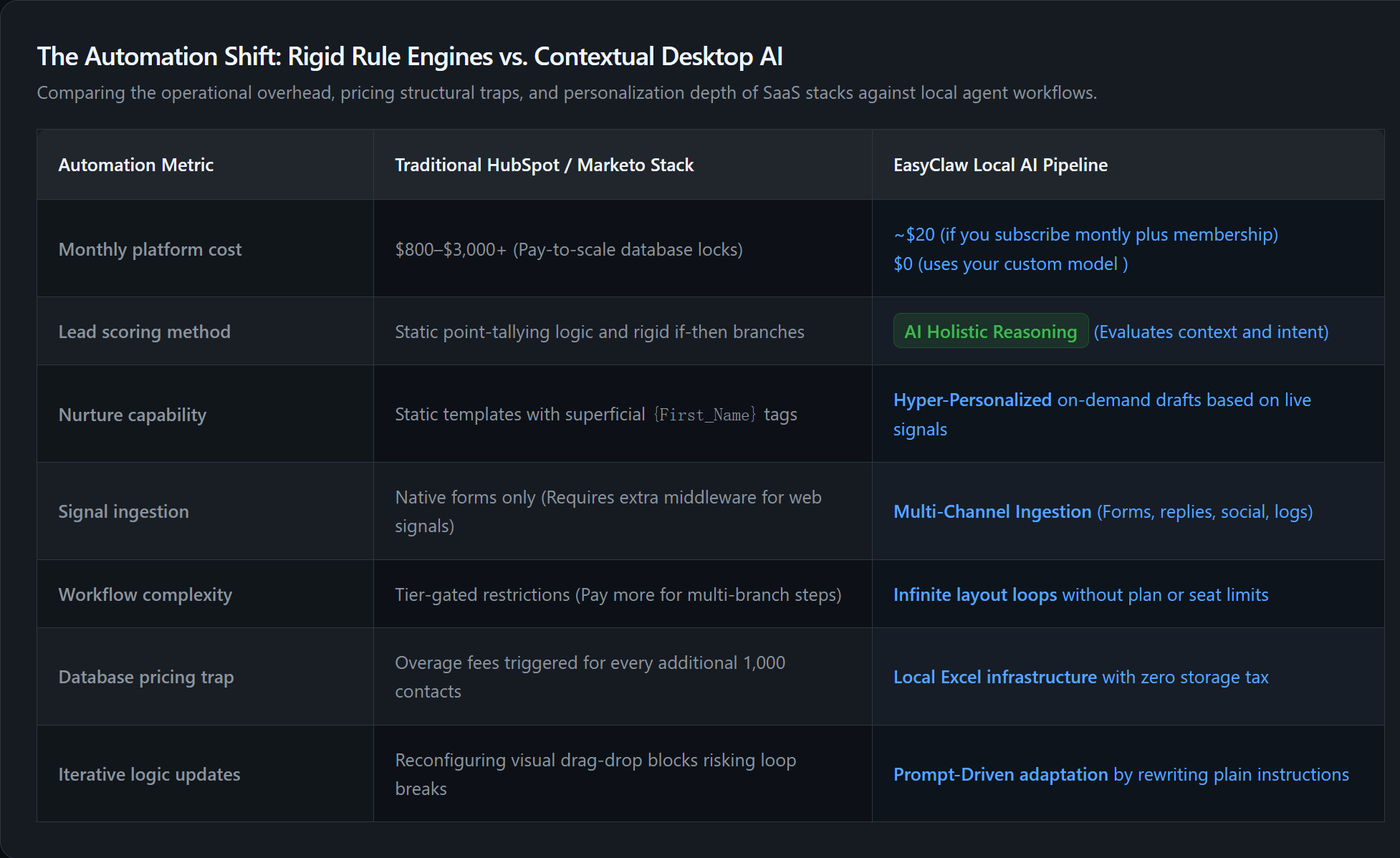
Traditional Platform vs. geração de demanda local de IA
| Métrica de Automação | HubSpot / Pilha de Marketo | Pipeline local de IA EasyClaw |
|---|---|---|
| Monthly Platform Cost | $800 – $3,000+ | $0 beyond AI subscription |
| Lead Qualification | Rule-based point scoring | AI context-aware reasoning |
| Nurture Personalization | Mesclagem de modelo + variável | Conteúdo por lead referenciando o comportamento real |
| Adaptação do Fluxo de Trabalho | Rebuild rules in visual editor | Update a paragraph, regenerate script |
| Data Ownership | Platform-controlled database | Local Excel – você possui tudo |
| Contact Limits | Pricing tier constrained | Unlimited — hardware é o único limite |
Por que EasyClaw substitui sua plataforma de automação de marketing
UM estratégia de geração de demanda alimentado por IA de desktop não é uma versão mais barata do Marketo – é mais inteligente. A plataforma pela qual os profissionais de marketing costumavam pagar era a automação. A plataforma que você acabou de construir é inteligência. A diferença é visível em cada e-mail que seu pipeline escreve e em cada decisão de qualificação que ele toma.
Monitora painéis de formulários, caixas de entrada de e-mail, análise de conteúdo e menções sociais – tudo a partir de um único agente.
Pesquisa a empresa e a função de cada lead antes de classificar - sem somar pontuações estáticas.
Gera conteúdo estimulante referenciando o que cada lead especificamente se envolveu e o contexto da empresa.
MQLs sinalizados com resumos de qualificação — sua equipe de vendas sabe exatamente por que cada lead está pronto.
Prós
- $0 beyond AI subscription vs US$ 800-3.000/mês
- Leads qualificados para IA, não contatos com pontuação de regras
- Contatos Unlimited – sem restrições de nível de preços
- Propriedade total dos dados – nada em um banco de dados de plataforma
- Adapta-se via linguagem natural – sem reconstrução do fluxo de trabalho
Limitações
- A área de trabalho deve ser executada para execução do cron
- Não substitui o conjunto completo de CRM do HubSpot
Perguntas frequentes sobre geração automatizada de demanda
Intelligence, Not Just Automation
Marketo e HubSpot construíram seus negócios com base em uma proposta de valor simples: automatizar as partes repetitivas da geração de demanda para que as equipes de marketing possam se concentrar na estratégia e no conteúdo. Essa proposta de valor era válida quando a alternativa era rastrear manualmente cada envio de formulário e enviar cada acompanhamento manualmente. Mas a automação que eles fornecem não vale entre US$ 800 e US$ 3.000/mês quando um agente de IA de desktop pode executar as mesmas funções com maior inteligência em cada etapa.
Seu pipeline EasyClaw captura sinais de entrada de cada canal que você especificar. Ele qualifica leads pesquisando sua empresa e função, e não somando pontos de um modelo de pontuação estático. Ele gera conteúdo estimulante que faz referência ao comportamento real do lead e ao contexto da empresa. Ele sincroniza leads qualificados com seu CRM e notifica você sobre respostas que precisam de resposta humana. Tudo isso é executado em seu desktop, em uma programação cron, sem uma plataforma de automação de marketing cobrando por contatos, e-mails ou etapas de fluxo de trabalho.
UM estratégia de geração de demanda alimentado por IA de desktop não é uma versão mais barata do Marketo. É mais inteligente. A plataforma pela qual os profissionais de marketing costumavam pagar era a automação. A plataforma que você acabou de construir é inteligência. Para diretores de marketing, gerentes de geração de demanda e equipes de crescimento em organizações globais, a diferença é visível em cada e-mail que seu pipeline escreve e em cada decisão de qualificação que ele toma.