


Introduction
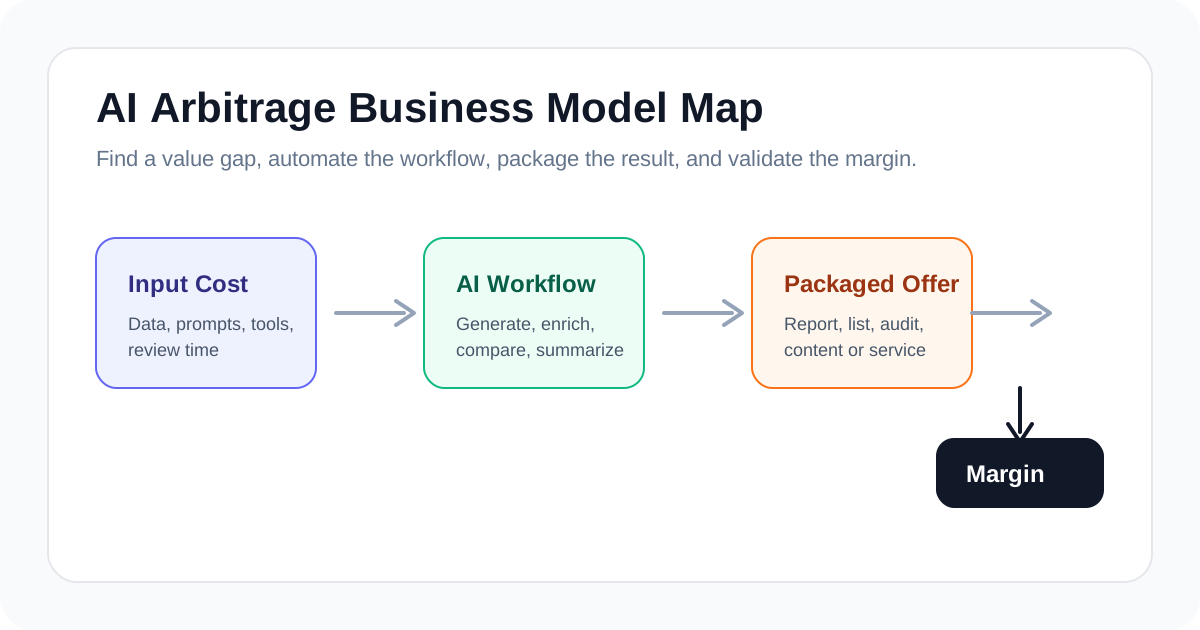
ai arbitrage is attractive because it sounds simple: use AI to create a gap between what something costs to produce and what someone is willing to pay for the result. The reality is more demanding. The margin only exists when the workflow solves a real problem, reaches the right buyer, and stays cheap enough to operate.
That makes AI Arbitrage less of a shortcut and more of a business model test. You need to understand the value being resold, the customer who benefits, the operating cost behind delivery, and the risks that can erase the profit.
The practical question is whether ai arbitrage can move from a clever idea to a repeatable offer with a buyer, a margin, and a delivery process that does not collapse under review or support work.
What AI Arbitrage Means in Practice
ai arbitrage starts with a simple mechanism: AI lowers the time, cost, or skill required to produce an output, and the operator packages that output for a market that values it.
For ai arbitrage, the important point is the gap between effort and value. AI may reduce the cost or time required to produce something useful, but that does not automatically create a business. The output still has to solve a problem someone cares about.
The working parts are:
- What value is being produced
- Who is willing to pay for that value
- What AI changes about the cost, speed, or quality of delivery
- What still requires judgment, distribution, trust, or domain expertise
How AI Arbitrage Actually Works
A useful workflow starts with a narrow outcome. Do not begin with a broad idea like "make money with AI." Start with a specific offer, buyer, input, output, and delivery standard.
A useful ai arbitrage workflow usually looks like this:
1. Define the result you are trying to produce.
2. Map the inputs, constraints, and resources that shape the process.
3. Run a narrow test before adding scale, budget, or complexity.
4. Review the weak points that create rework, leakage, or false confidence.
5. Tighten the loop with better validation, clearer ownership, and lower delivery cost.
The workflow becomes stronger when each step has a clear pass-or-fail standard. If the output cannot be reviewed, priced, delivered, or repeated, the model is still too vague to scale.
AI Arbitrage Revenue Model and Margin Drivers
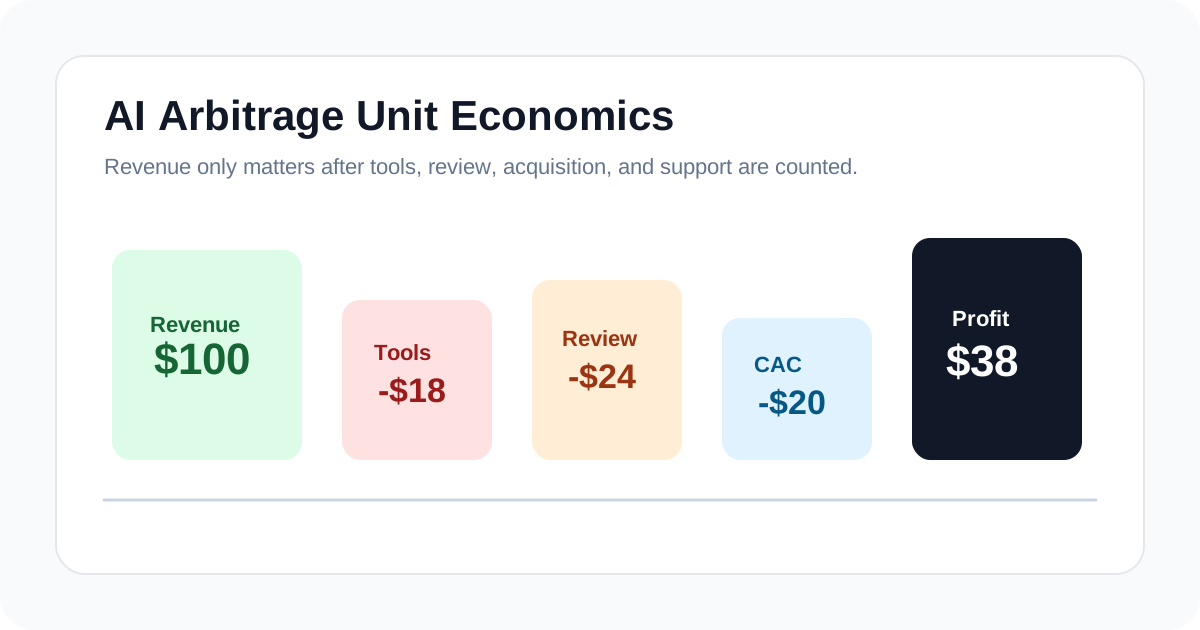
The economics of ai arbitrage come from the spread between delivery cost and perceived value. Revenue alone is not enough. The model only works when margin, acquisition friction, operating cost, and competition leave enough room for profit.
| Driver | What to inspect | Why it matters |
|---|---|---|
| Demand source | Search, referrals, communities, outbound, paid channels | Demand quality changes the economics faster than topline volume |
| Cost base | Tools, labor, fulfillment, review time, support | Thin margins disappear when operating cost stays hidden |
| Repeatability | Can the process be repeated without heroic effort? | One-off wins do not create a durable model |
| Defensibility | Data edge, workflow speed, distribution, trust | Weak moats collapse when the tactic becomes crowded |
A model is only attractive when these drivers work together. High demand does not help if delivery cost is too high. Cheap production does not help if the output is generic. A good opportunity has both a clear buyer and a delivery process that can keep its margin.
AI Arbitrage Risks, Saturation, and Failure Modes
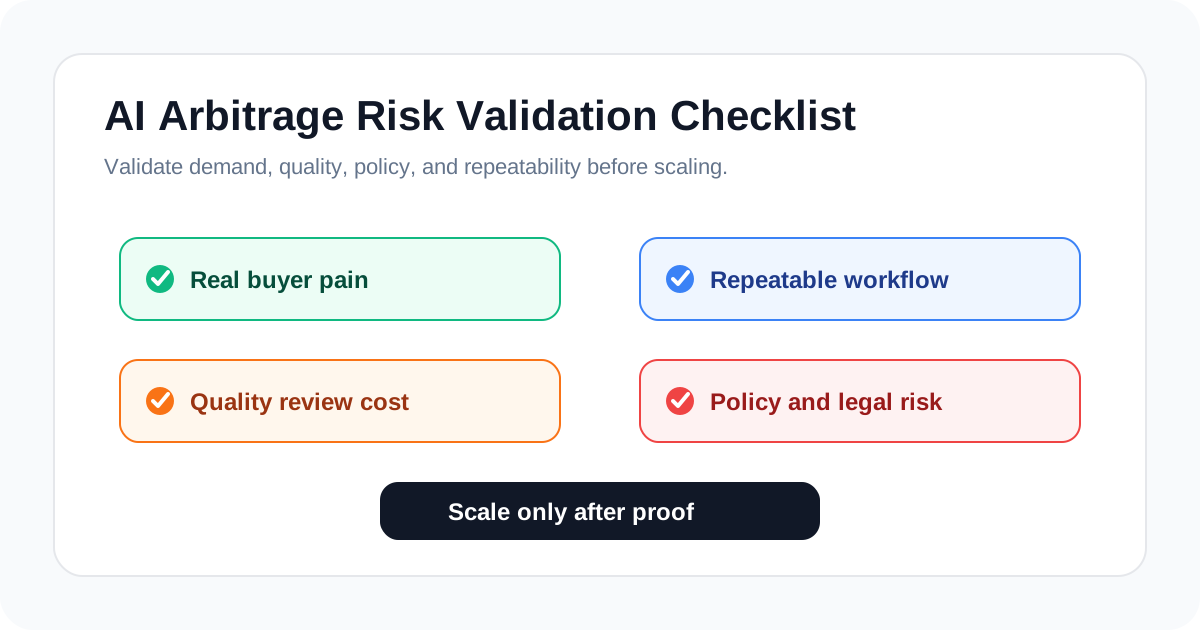
Risk matters because an idea that sounds attractive still has to survive real pressure. The upside only counts when the workflow, economics, and trust requirements can hold together.
Common risks around ai arbitrage usually include weak assumptions, dependence on one channel or platform, low-quality inputs, poor validation, and thin margins once the obvious path gets crowded.
The right move is not to avoid the idea entirely. It is to make the risks inspectable before you commit more time, money, or process weight.
Real AI Arbitrage Examples and Patterns
Examples matter because they show whether the model survives contact with reality. A useful example includes the setup, the moving parts, and the reason one version works while another version stalls.
A useful ai arbitrage example includes:
- The starting constraint or market condition
- The actual action taken
- The point where value was created or lost
- The risk that would break the result at larger scale
Without that level of detail, examples become motivational copy instead of proof.
AI Arbitrage: How Does AI Arbitrage Work?
"How does AI Arbitrage work?" points to a practical decision. The useful answer depends on whether the idea can move from concept to execution without losing its margin, quality, or trust.
A good rule is to test one clear offer before expanding. Define the buyer, the output, the delivery cost, and the quality bar. If those four parts are unclear, the opportunity is not ready for scale.
That keeps the idea grounded. It also protects you from treating a broad trend as if it were already a working business.
AI Arbitrage: What Are The Main Risks Of AI Arbitrage?
"What are the main risks of AI Arbitrage?" points to a practical decision. The useful answer depends on whether the idea can move from concept to execution without losing its margin, quality, or trust.
A good rule is to test one clear offer before expanding. Define the buyer, the output, the delivery cost, and the quality bar. If those four parts are unclear, the opportunity is not ready for scale.
That keeps the idea grounded. It also protects you from treating a broad trend as if it were already a working business.
Where EasyClaw Fits Into AI Arbitrage Workflows
Some keywords naturally overlap with agent workflows, desktop actions, file handling, browser work, and recurring operational tasks. That is where EasyClaw AI agent platform fits best.
EasyClaw is an AI agent platform built to let people automate work on their own computers through a graphical interface and one-click setup, without having to manage Docker or Python by hand. It supports desktop automation, chat-based remote control, prebuilt agents, and multiple model providers.
For teams that already know the work they want to automate, that matters because the bottleneck is often setup and execution, not imagination. A graphical agent platform can make the workflow easier to test before a team invests in custom infrastructure.
FAQ: AI Arbitrage
How Does AI Arbitrage Work? Give the sequence, the checkpoints, and the failure points that matter once someone actually tries to execute it.
What Are The Main Risks Of AI Arbitrage? Explain the constraints plainly and show what should be validated before time or budget expands.
How Do You Improve Results With AI Arbitrage? Show where the economics come from, where they disappear, and what usually breaks the model in practice.
Bottom Line: AI Arbitrage
ai arbitrage is worth taking seriously only when the concept connects to a clear buyer, a clear workflow, and a clear way to measure whether the result is useful.
The practical path is simple: define the value, test the economics, inspect the risks, and improve the workflow before you scale it.