


The Uncomfortable Truth About Every Paid B2B Lead Database
Apollo, Lusha, ZoomInfo, and their competitors do not manufacture proprietary data. They scrape public information — company websites, job boards, conference directories, business registries, press releases — aggregate it into a searchable interface, and charge you a monthly subscription to access what was already freely available. The value they provide is not the data itself. It is the convenience of not having to visit fifty different websites yourself. At $100/month, you're paying roughly $1,200/year for someone else to run a web scraper on your behalf, and if you stop paying, you lose access to everything.
The alternative is not a cheaper lead database. It's a local AI agent that goes directly to the same public sources Apollo scrapes, extracts the same information, and writes it to your local Excel file — without the monthly toll, without per-credit pricing, and without your search history and prospect lists living on a third-party server.
High-Signal Public Sources to Find B2B Leads
Before building the pipeline, map out the public data sources that paid databases rely on. Industry conferences and trade shows publish exhibitor directories for every event — a single manufacturing expo contains hundreds of companies with names, websites, and executive contacts. Job boards are an even richer signal: a mid-size SaaS company posting a VP of International Sales role is telegraphing their growth priorities. LinkedIn company pages display employee counts, industry categories, and recent updates even without Sales Navigator. Business registries in most countries list directors and company addresses as public record. Press release wires carry daily announcements of funding rounds, executive hires, and expansions — all buying-intent signals.
Paid databases built their business model around aggregating these public signals and charging for access. EasyClaw breaks that model by letting your desktop agent visit the sources directly. The agent doesn't need API credits to read an exhibitor page or check a job board. It opens a browser tab, reads the page, extracts the data, and moves on — the same way you would, automated and at zero marginal cost.
Step-by-Step: How to Get Leads for Free Automations
Step 1: Enable Browser Tool and XLSX Skills
Enable Browser Tool — the engine that lets your agent open exhibitor directories, scan job boards, read LinkedIn pages, and navigate company websites with your real Chrome and login sessions. Enable XLSX for structured Excel output. These two skills are all you need to get leads for free from public sources at scale.
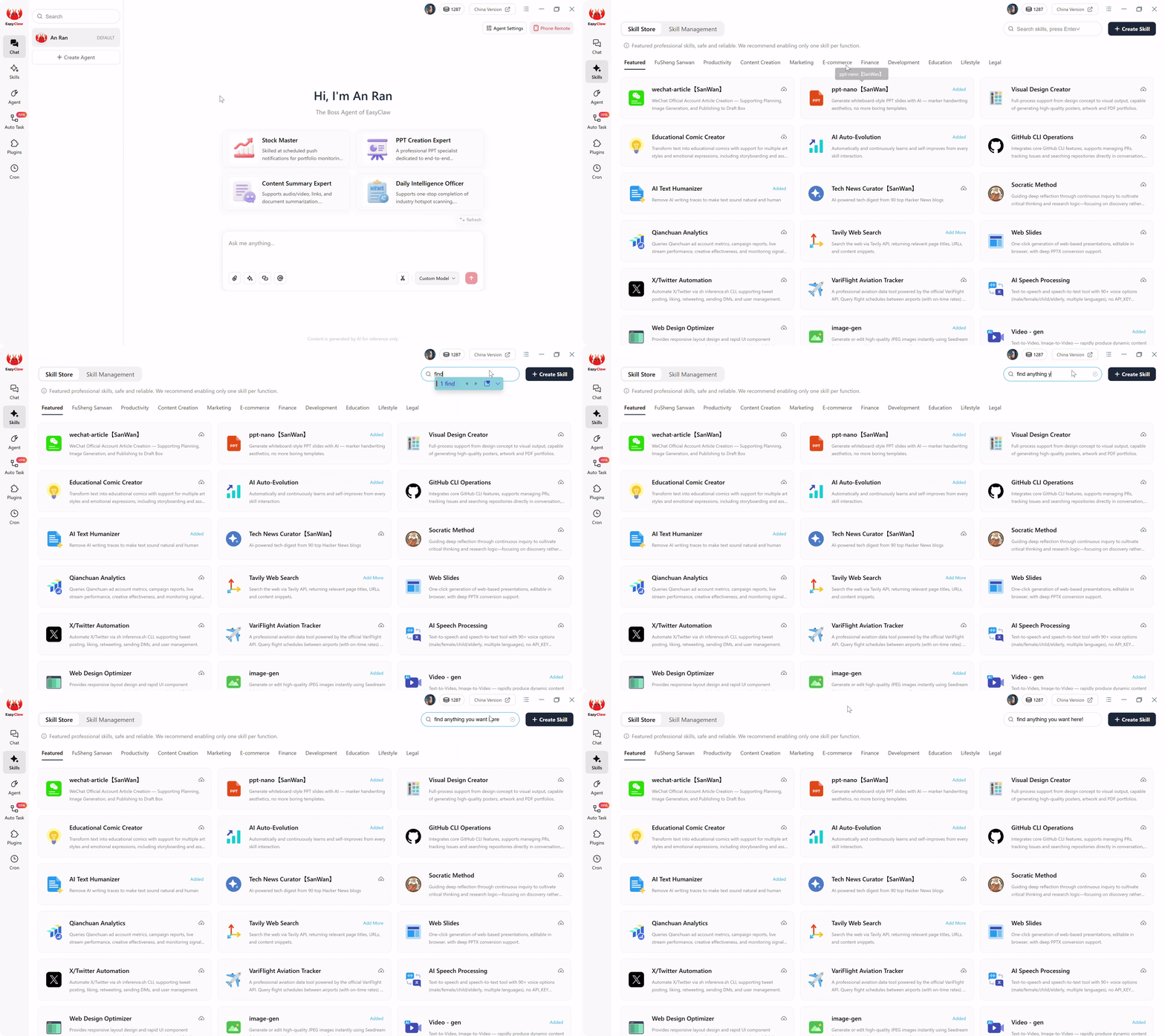
Enable Browser Tool and XLSX skills in EasyClaw to equip your agent for autonomous lead discovery from public sources.
Step 2: Let AI Generate Your Lead Discovery Pipeline
Open the EasyClaw chat and describe your target sources — conference directories, job board URLs, LinkedIn searches, press release keywords — and your ideal customer profile. The AI generates a pipeline script covering source scanning, enrichment from public sources (no paid APIs), AI qualification and scoring, and local Excel output with color-coded tabs. Start with 2-3 sources, not 10. A pipeline scanning three high-signal sources will produce more actionable leads than one spread thin across twenty generic ones.
The AI-generated pipeline script defines extraction rules, enrichment logic, and scoring criteria — all in a clean Markdown file you can review and edit anytime.
The beauty of this approach reveals itself when you discover a new source. Attending a trade show next month? Add the exhibitor URL to the prompt, regenerate the script, and your pipeline automatically includes that event's directory in the next scan cycle. You're not locked into a database vendor's coverage — your coverage expands with every URL you add.
Step 3: Schedule the Discovery Pipeline
Create a Cron job "Free Lead Discovery" — weekly Monday mornings work well for conference directories and job boards. Prompt: "Read and execute free-lead-discovery.md in my workspace." You arrive Monday to a list of qualified leads a paid database would have charged you to access — except these leads are fresh, sourced directly from the public web on extraction day, and they cost you nothing.
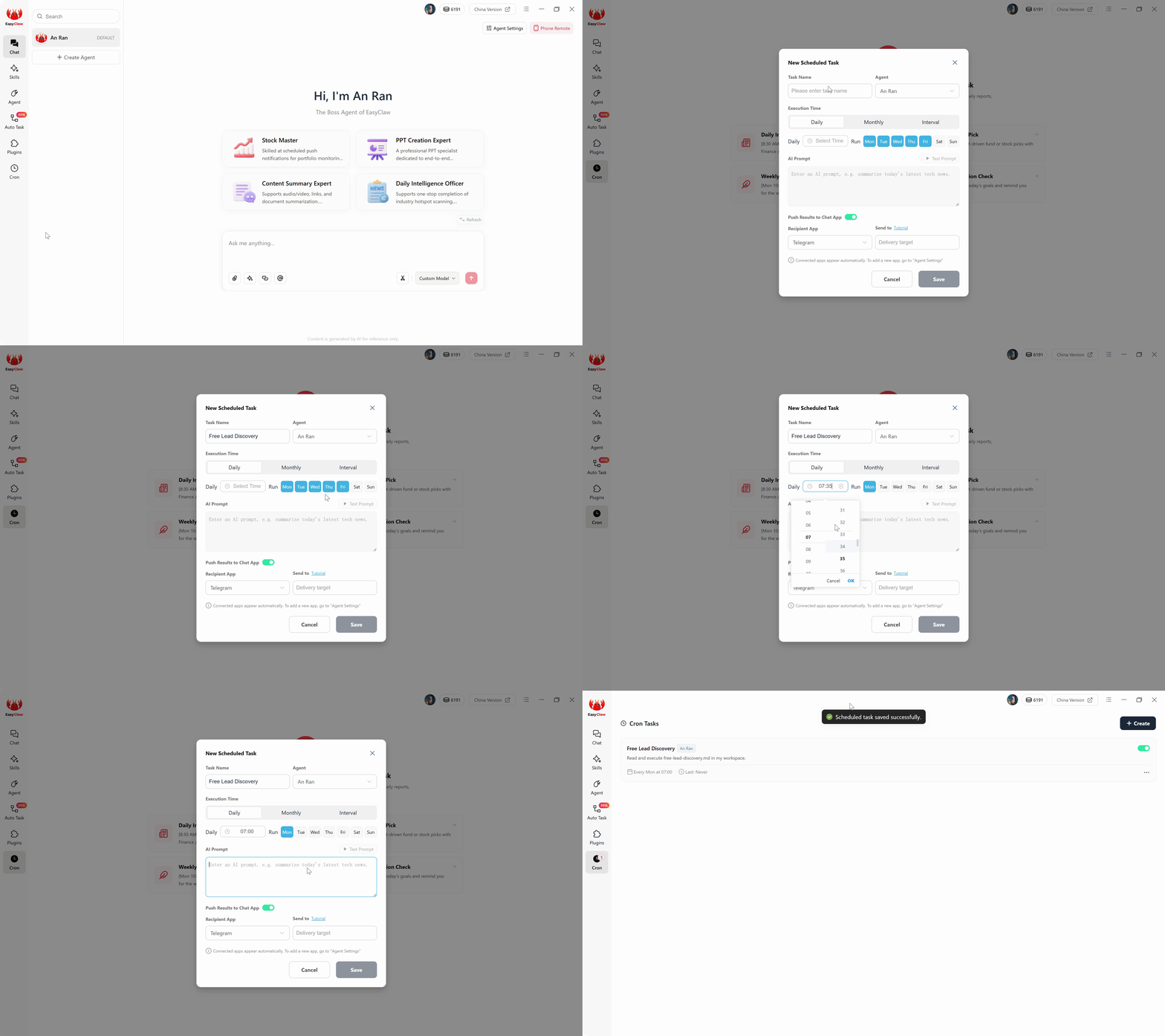
Schedule your lead discovery pipeline to run automatically — every Monday morning, your desktop wakes up and hunts for fresh B2B leads from public sources.
What Paid Databases Don't Want You to Realize
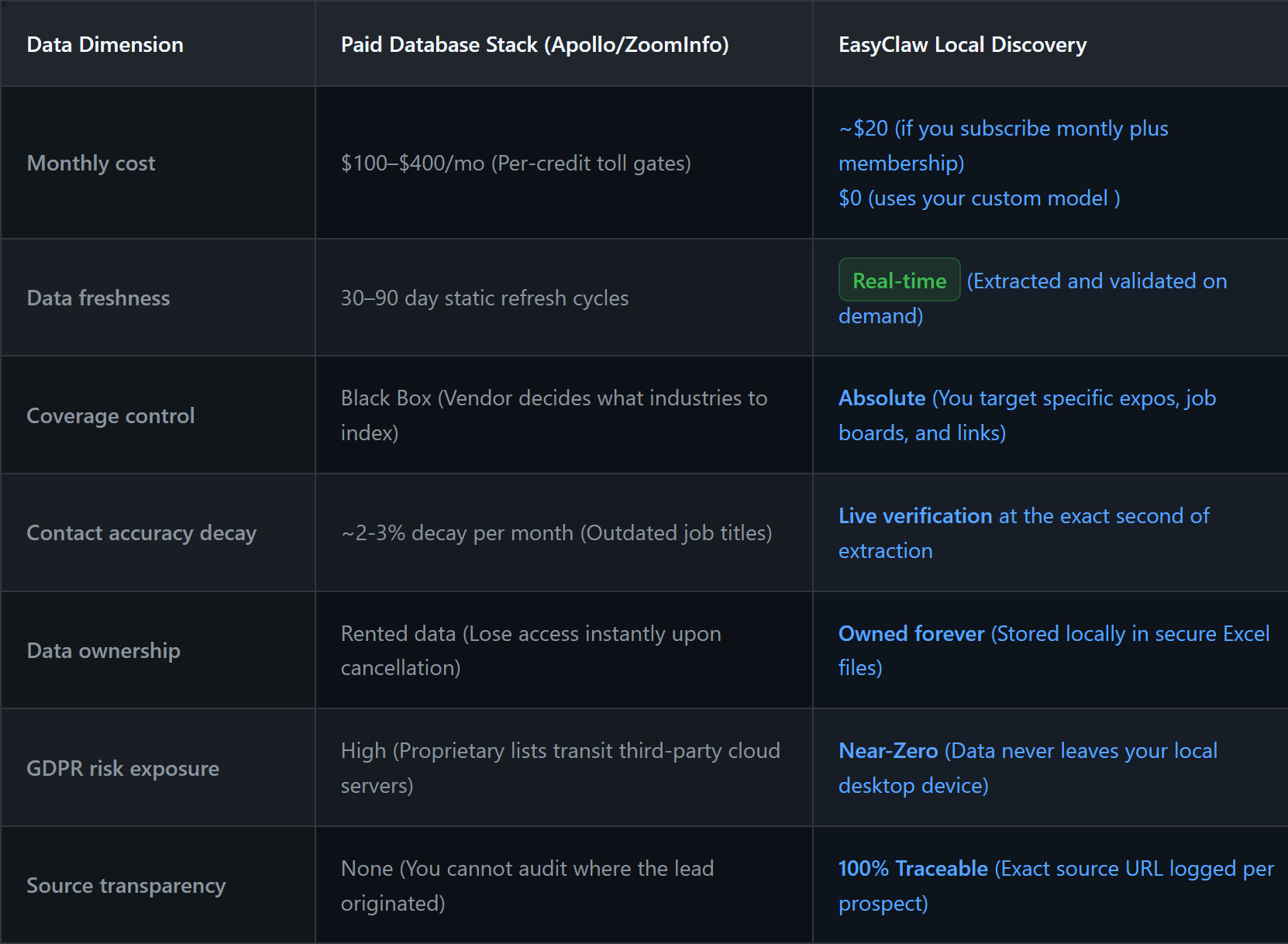
Paid databases sell on three promises: breadth of coverage, accuracy, and ease of access. All three are worth scrutinizing. Coverage: Apollo advertises 200M+ contacts — but how many are relevant to your market? If you sell enterprise software to European manufacturers, Apollo's database of American real estate agents is irrelevant overhead you're subsidizing. A local agent scanning exactly the sources you specify produces a smaller list, but every name is in your market.
Accuracy: contact data decays at 2-3%/month as people change jobs and companies rebrand. The CTO listed in Apollo might have left eight months ago. A local agent checking LinkedIn on extraction day sees the current title and company. Data verified three seconds ago beats data verified three months ago. Ease of access: before desktop AI agents, manually visiting fifty exhibitor directories wasn't practical — paying Apollo made economic sense. That equation has shifted. When an AI agent visits those same sources automatically on a schedule at zero marginal cost, the convenience premium becomes indefensible.
| Data Dimension | Paid Database (Apollo/ZoomInfo) | EasyClaw Local Discovery |
|---|---|---|
| Monthly Cost | $100 – $400+ | $0 beyond AI subscription |
| Data Freshness | 30-90 day refresh cycles | Real-time — extracted and verified on demand |
| Coverage Control | Black box — you get what they index | Absolute — you choose every source |
| Contact Accuracy Decay | 2-3% per month | Zero — verified at extraction moment |
| Data Ownership | Rented — cancel and lose access | Permanent — data lives in your local Excel file |
| Source Transparency | None — you can't verify where data came from | 100% traceable — every source URL recorded |
Why EasyClaw Is the Best Way to Find Leads for Free Today
The business model of paid lead databases relies on simple arbitrage: public data is free but inconvenient to collect, so customers pay for convenience. That arbitrage is collapsing because desktop AI agents eliminated the inconvenience without reintroducing the cost.
Scan exactly the directories, job boards, and registries relevant to your market — not subsidizing irrelevant database coverage.
Funding announcements, executive hires, job postings, conference appearances — all aggregated into one lead profile.
Cancel Apollo and lose access. Your EasyClaw pipeline produces Excel files you own forever.
Add sources for any region — US, Europe, APAC, LATAM. No per-region pricing tiers. No coverage gaps.
Pros
- $0 monthly — replaces $100-400/mo database subscriptions
- Real-time data — verified at extraction, not months ago
- 100% source transparency — every lead has a traceable origin
- Expandable coverage — add new sources in plain English
- Free tier available
Limitations
- Requires upfront source curation
- Not a drop-in Apollo replacement with pre-indexed database
FAQ About Finding B2B Leads for Free
The End of the Paid Database Era
The business model of paid lead databases relies on simple arbitrage: public data is free but inconvenient to collect, so customers pay for convenience. That arbitrage is collapsing because desktop AI agents have eliminated the inconvenience without reintroducing the cost.
Your EasyClaw pipeline discovers B2B leads from the same public web Apollo and Lusha index — exhibitor directories, job boards, LinkedIn pages, press releases, business registries. It enriches missing fields by cross-referencing sources, scores leads against your ICP, and writes structured output to a local Excel file. All on a schedule, without a monthly subscription, and without prospect data touching a third-party server.
When you cancel Apollo, you lose access to Apollo's database. When you stop paying for your EasyClaw pipeline, you keep every lead you ever extracted — because the data lives in an Excel file on your desktop. Find b2b leads for free has always been possible. What changed is that you no longer need to do the work yourself. For sales teams, marketing agencies, and founders across the US, Europe, and Asia, you describe where to look and what a qualified lead looks like. The agent does the rest.