


Introduction
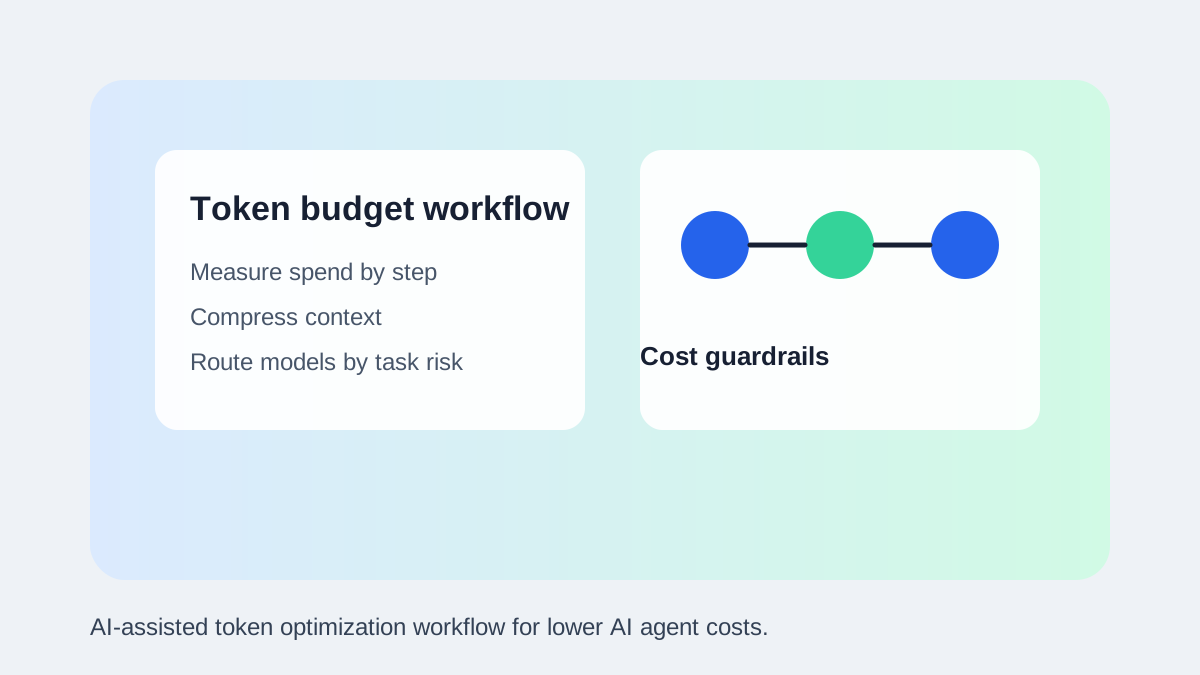
Most teams do not struggle with mcp token overhead because one prompt is too long. They struggle because the workflow keeps rereading context, calling tools without a budget, retrying failed steps, and sending routine work to expensive models.
That is why mcp token overhead should start with waste removal, not blind prompt shortening. The target is simple: spend tokens where they improve the answer, and stop spending them where they only repeat, reformat, or reprocess information the system already has.
In this article, mcp token overhead is the primary keyword. Related ideas such as MCP And CLI Token Efficiency, prompt caching, context compression, and model routing are supporting topics.
Start MCP Token Overhead With a Token Budget
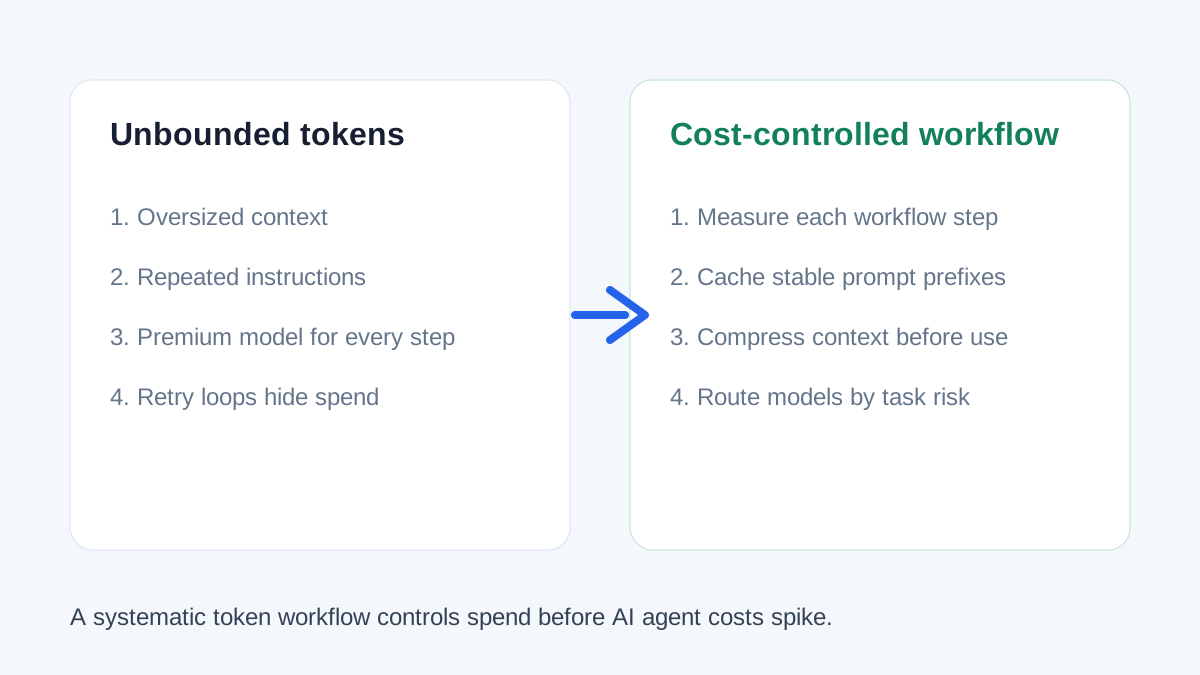
A shorter prompt can make an agent cheaper and worse at the same time. If the prompt loses the constraints, examples, or source material that keep the output correct, the agent may retry, ask for clarification, or produce low-quality work that a person has to fix.
Set a budget per completed task instead.
| Workflow step | What to track | Why it matters |
|---|---|---|
| Planning | Input tokens, tool plan length | Bloated plans often repeat task instructions |
| Retrieval or tool use | Tool-call count, returned text size | Raw outputs can flood the next model call |
| Reasoning | Model used, retries, output tokens | Premium models are expensive when used for routine steps |
| Final answer | Edit rate, acceptance rate | Cheap output is not cheap if humans rewrite it |
Use Prompt Caching to Reduce MCP Token Overhead
Prompt caching helps only when the repeated part of the prompt stays stable. If your system prompt, examples, schema, or tool instructions change slightly on every call, the cache hit rate drops and the savings disappear.
MCP Token Overhead Cache Candidates
- System instructions that rarely change
- Output schemas and validation rules
- Few-shot examples used across many similar tasks
- Tool descriptions that are reused across runs
What Breaks Cache Hits
- User-specific context mixed into the first prompt block
- Timestamps, random IDs, or dynamic metadata placed before stable instructions
- Retrieved documents inserted before the reusable prompt prefix
- Long tool outputs that change every run
Compress Context Before Expensive MCP Token Overhead
Context compression does not mean summarizing everything into vague notes. It means preserving the fields needed for the next decision and dropping the rest.
MCP Token Overhead Context Compression Checklist
- What decision will the model make next?
- Which facts are required for that decision?
- Which parts are evidence, and which parts are noise?
- What must remain quoted exactly?
- What can be converted into structured fields?
Example: if an agent reviews a 40-page policy document, do not pass the full document into every downstream step. First extract clauses, dates, obligations, exceptions, and source references. Then send the compact structure to the model that performs the final reasoning.
Route Models by Risk to Reduce MCP Token Overhead
Model routing is one of the cleanest ways to lower cost, but only if the routing rule is specific. "Use the cheaper model when possible" is not a rule. It is a hope.
Routing Rules by Task Risk
| Task type | Model choice | Reason |
|---|---|---|
| Classify a short input into known labels | Cheaper model | Low ambiguity, easy validation |
| Convert raw text into a fixed schema | Cheaper or mid-tier model | Deterministic output with validation |
| Decide between conflicting evidence | Stronger model | Judgment matters more than token savings |
| Write final executive recommendation | Stronger model | Mistakes are visible and costly |
| Repair invalid JSON | Cheaper model | Mechanical task, retry cost is low |
Put Stop Conditions on MCP Workflows to Control MCP Token Overhead
MCP and tool-heavy agent workflows can create token overhead because every tool description, call result, and intermediate observation can become part of the model context. That overhead is useful only when it changes the next decision.
MCP Token Overhead Controls for Agent Workflows
- Maximum number of tool calls per task
- Maximum returned characters per tool result
- Required fields that must be found before stopping
- Confidence threshold for ending search
- Fallback path when the agent cannot find enough evidence
Clean Inputs Before MCP Token Overhead Breaks Down
Token control also depends on the quality of the inputs the model receives. Raw webpages, long logs, duplicate records, navigation text, and unfiltered tool output can all push noise into the context window.
Input Cleanup Before Model Calls
- Keep the fields needed for the next decision.
- Remove boilerplate, repeated navigation, empty fields, and duplicate text.
- Preserve source URLs, timestamps, IDs, and exact quotes when they affect trust.
- Pass summaries only when the next step does not require the original wording.
MCP Token Overhead Pre-Launch Checklist
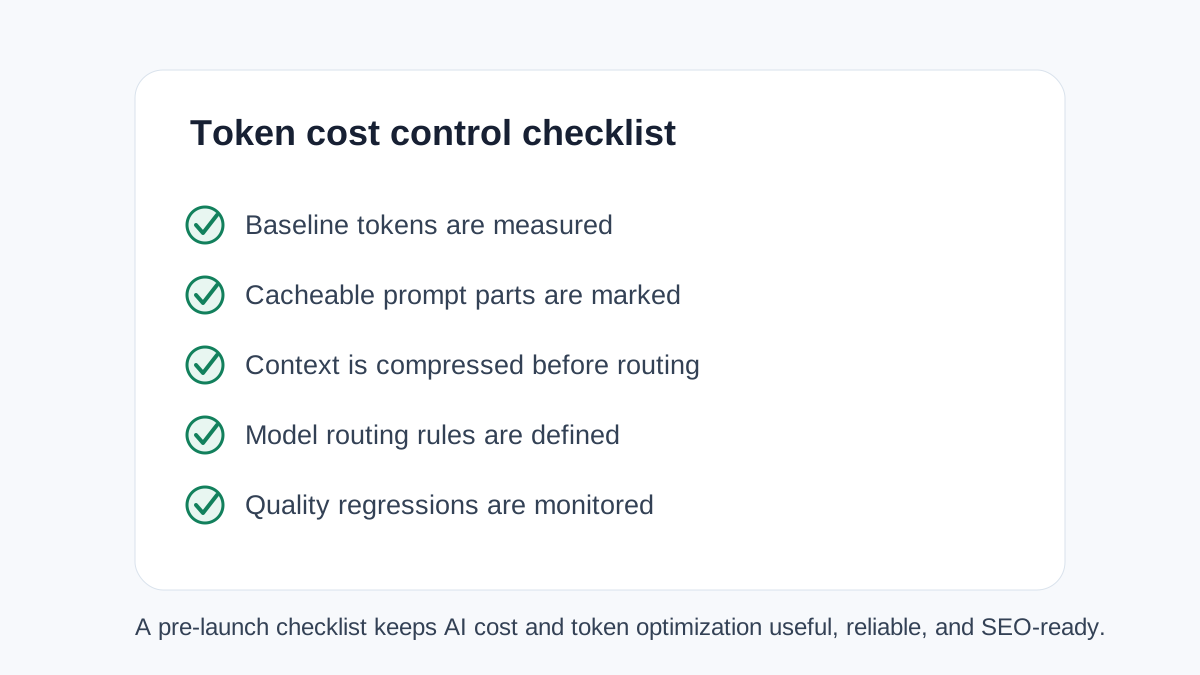
- Log input tokens, output tokens, tool calls, retries, model choice, and final task status.
- Calculate cost per successful task, not only cost per API call.
- Move stable instructions, schemas, and examples into a cache-friendly prefix.
- Keep dynamic user context after the stable prefix.
- Compress long inputs into task-specific structures before expensive reasoning steps.
- Route low-risk tasks to cheaper models and monitor retry rate after the change.
- Cap tool-call count and returned text size for MCP or tool-heavy workflows.
- Add regression tests for output quality before and after token reductions.
Avoid Mistakes That Keep MCP Token Overhead High
Optimizing the prompt before measuring the workflow. This often saves a few tokens in the visible prompt while ignoring the hidden cost of retries and tool output.
Compressing away evidence. Summaries are useful, but some workflows need exact quotes, IDs, prices, dates, or citations. Preserve those fields explicitly.
Routing everything to a small model. Cheaper models are excellent for narrow steps. They are not automatically cheaper when judgment errors create retries.
FAQ: Choosing the Right MCP Token Overhead Strategy
What is the first thing to measure? Measure cost per successful task. Include retries, tool calls, and failed outputs. Per-call cost hides too much.
When should I use prompt caching? Use it when the same large instruction block, schema, or example set is reused across many similar requests. Put dynamic context after the stable prefix.
How do I know if a cheaper model is actually cheaper? Compare total cost after retries and human edits. A cheaper model with a higher failure rate can lose.
Bottom Line: MCP Token Overhead Is Workflow Design
mcp token overhead works best when it is treated as workflow design. Measure the full task, cache what stays stable, compress context before expensive steps, route models by risk, and put limits around tool-heavy workflows.
Do that before you start shaving words from every prompt. The biggest savings usually come from removing repeated work and noisy inputs, not from making a good instruction slightly shorter.